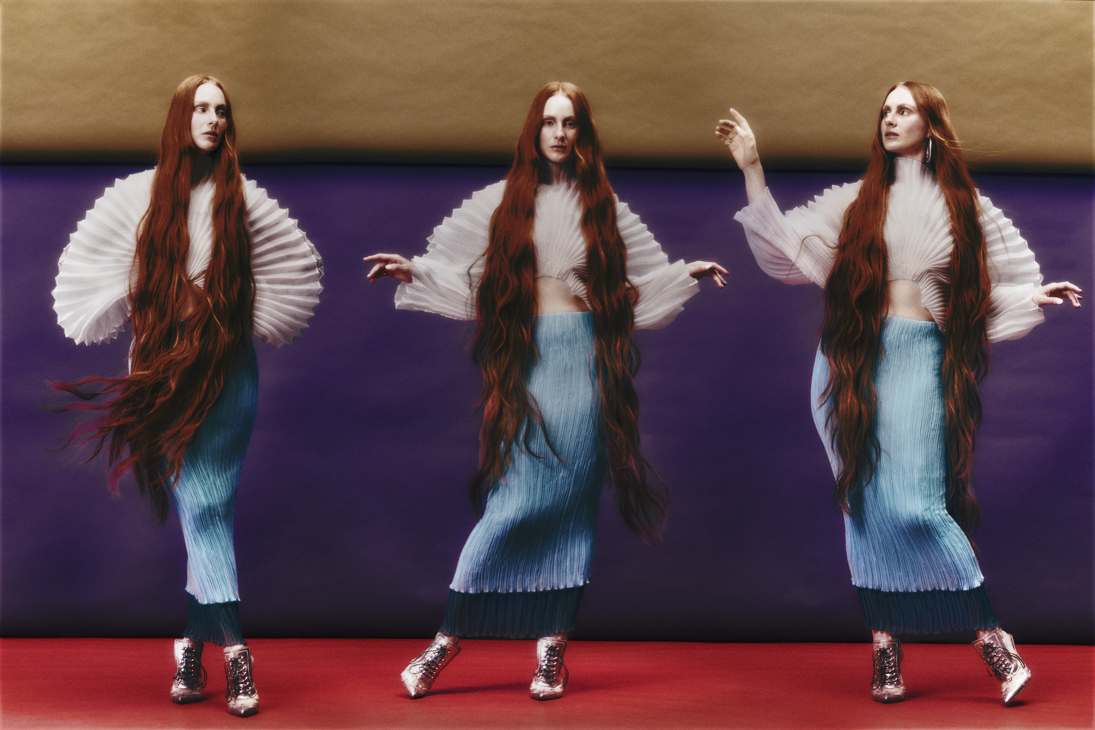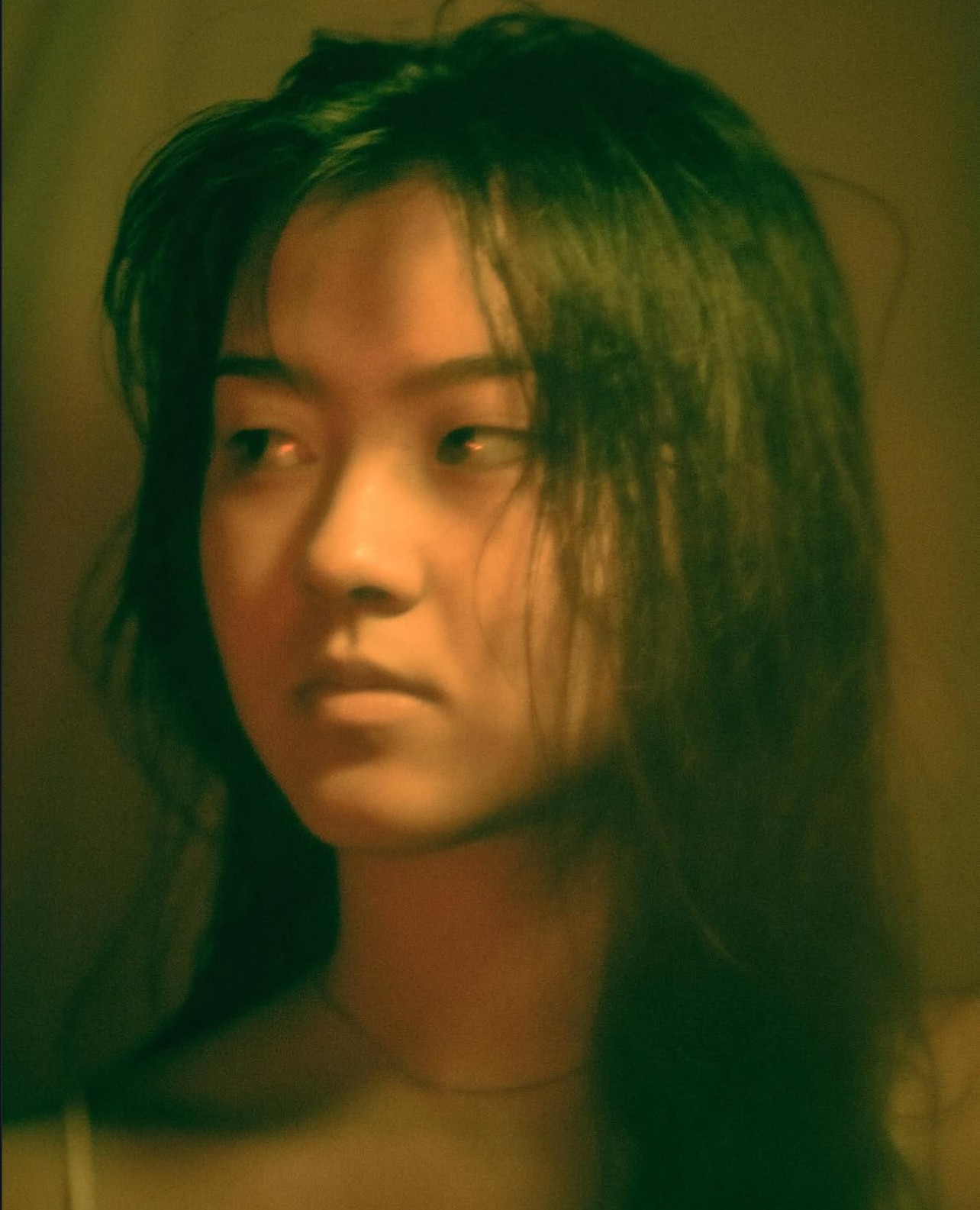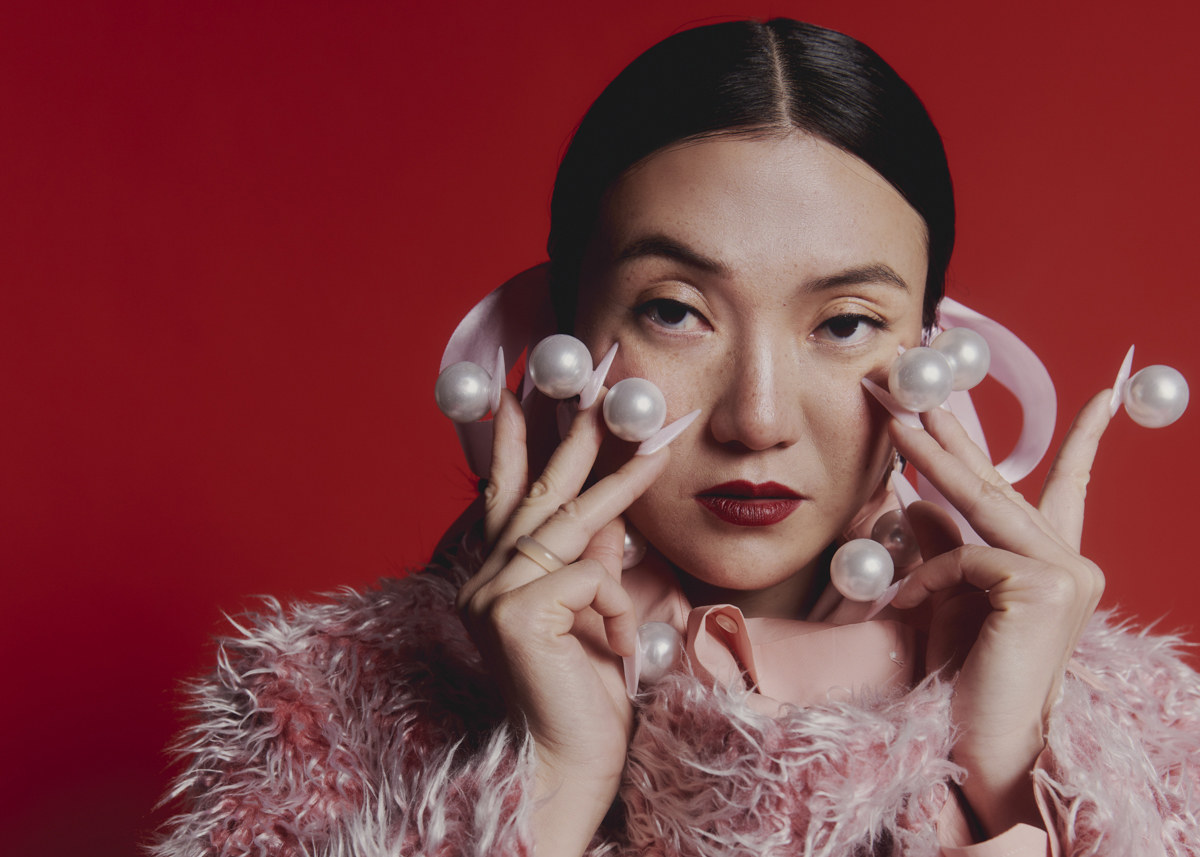

Rainbow Chan (she/her) is a multidisciplinary artist working across music, performance and visual art. With more than 15 years of experience making music and over five years working professionally as a visual artist, her practice moves fluidly between sound, image and performance.
As a musician, Chan writes, produces and performs her own work, singing and playing several instruments, including the saxophone. Her sound can broadly be described as experimental pop, often moving between electronic music and more abstract sonic worlds. She also composes music for theatre and film.
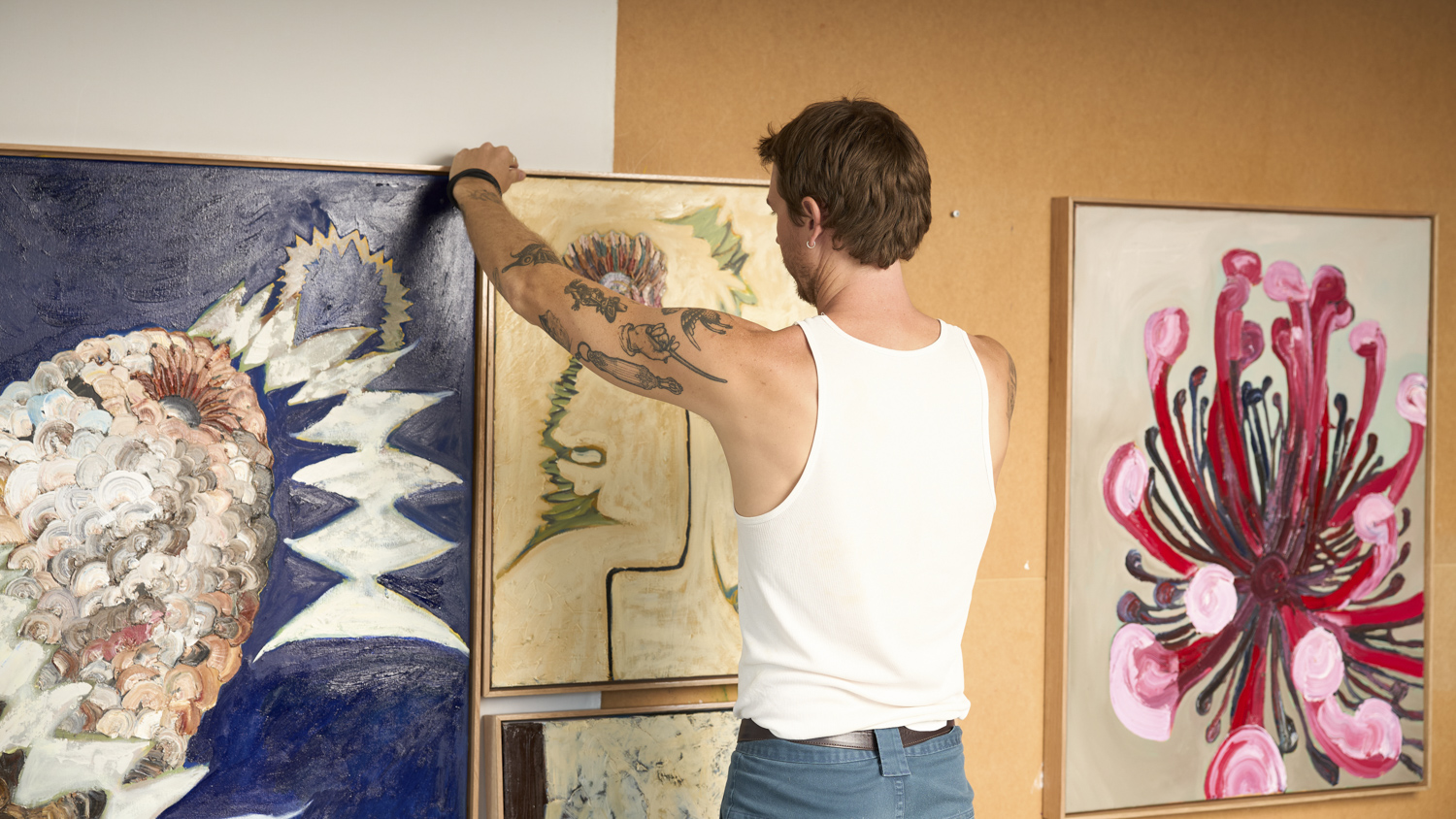
Her visual art practice centres on large-scale silk paintings and Chinese brush painting on xuan paper. Her music and visual art practices continually inform one another, often converging through immersive installations and performances.
Born in Hong Kong, Chan moved to Sydney at the age of six before relocating to Naarm/Melbourne in 2023. She now works between Melbourne and Sydney. Her experience growing up in a migrant family and navigating different languages and cultural contexts continues to shape her practice. Through her work, she explores ideas of language, memory, cultural inheritance and belonging, alongside the sense of in-betweenness often experienced within diasporic life.
1. What are you currently working on, and what feels most exciting about it right now?
I’m about to release my third full-length album, “The Bridal Lament”. The record reimagines the traditional bridal songs of the Weitou people, one of Hong Kong’s earliest settlers, to whom I’m connected through my mother. Half-sung and half-wept, bridal laments were performed by women in the lead-up to arranged marriages as a way of saying farewell to their loved ones. The ritual offered a rare opportunity for women to publicly express their grief, anger and frustration with the patriarchal structures shaping their lives. Passed down orally for centuries, these songs are now on the brink of disappearing. I worked with my mother and female elders in Hong Kong to relearn several of the laments. On the album, I rework them through a contemporary lens, blending folk melodies and lyrics with experimental production, electronic instrumentation and manipulated vocals. I’m especially excited that the record is being released by local legends Music in Exile, both digitally and as a limited-edition vinyl.
2. What’s been taking up the most space in your mind lately?
Besides the bridal laments, I’ve been learning the Weitou language from my mum. It’s a dialect of Cantonese with its own distinct vocabulary, pronunciations and idioms. It was my mum’s mother tongue, but fewer and fewer people speak it now. I’ve been thinking a lot about languages disappearing around the world, and I’ve just started reading “How to Kill a Language: Power, Resistance and the Race to Save Our Words” by Sophia Smith Galer, which investigates this very subject. Learning Weitou, slowly but surely, feels like my own small act of resistance and empowerment.

3. How many “drafts” do you usually make before the final version?
So many! I’ve really learnt to embrace drafts and see them as a valuable record of the process. I like journalling and reflecting on how a work has evolved, because sometimes the mistakes or happy accidents in an early version are the most compelling parts—and often the hardest to recreate later. At some point, usually when there’s a deadline, you have to commit to a version. But I tend to think of the “final” work as just another draft which I might revisit years later when I’m inevitably a different version of myself, or when the work and its reception have taught me something I didn’t know before.

4. What are you currently drawn to visually, emotionally, or creatively?
Lately, I’ve been drawn to comfort cooking to get me through the winter. Things that force me to slow down such as taking a break every 20 minutes to stretch or hydrate. Weirdly, I’m also enjoying practising piano scales for the first time in 30 years. There’s something satisfying about returning to the basics and finding pleasure in repetition.
5. Where do you find inspiration? How do you know it’s a good idea worth trying?
I often find inspiration in language itself. I’m fascinated by etymology because words carry traces of history and the values of the people who used them. When I follow the evolution of a word, in either English or Chinese, I uncover stories and associations that can become the starting point for a song or artwork. I’m also drawn to what has been lost, altered or distorted over time. I keep a bank of interesting words and their etymologies, which often become seeds for new ideas. As for knowing whether an idea is worth trying, I tend to think they all are—you don’t know what something can become until you actually do it.
6. What’s been challenging you the most lately, and how are you navigating it?
Being addicted to social media reels and spending hours mindlessly scrolling. I’ve set a time limit on my phone, which helps a little, and when I notice I’ve had too much screen time, I’ll read a book or go for a walk instead. So much of my music work already happens on a computer so I’m making a conscious effort to spend more of my free time away from screens.

7. How much of your process is intuition vs how much of it is discipline?
It’s a mixture of both. Intuition generates the initial spark, but discipline carries the idea through to completion. I don’t think people appreciate discipline enough, perhaps because it has such negative connotations (I think of those aforementioned piano scales that used to make me cry!) But I’ve come to see it differently. It’s not about achieving perfection. It’s about committing to your practice, refining those early drafts and experiments, and seeing an idea through even if it means eventually letting it go. Throughout that process, intuition keeps stepping in, telling you when to adapt or change direction when something isn’t working.
8. What’s something you’re proud of at the moment that people might not see?
I’ve been reducing food waste, batch cooking and making the most of my freezer. Not very sexy stuff, but it makes me happy. I’m proud that I’ve been prioritising the basics: eating well, cooking for myself, exercising, seeing friends and going to bed at a reasonable hour. I’m also much kinder to myself these days.
9. What are your practices/rituals to get you into a flow state?
I love lap swimming and meditation. Both are grounding practices that bring my racing mind back into my body through breath, repetition and attention to the present moment. I always feel better after a swim, and I find that the work comes more freely when I’m in a good place physically and mentally.

10. If you had an unlimited amount of money, what would you create?
A free museum, music library and art gallery with a focus on platforming and supporting marginalised voices from around the world.