Through comic-inspired works, Molly Hunt captures the practices that shape life in the Dry.
The dragonflies are the first signs.
As the East Kimberley cools, they skate across the sky and hint at the arrival of the Dry season. For artist Molly Hunt, their return marks a pivot in pace – one that lies at the heart of her new exhibition, How We Move in the Dry.
To be shown at Black Canoe Gallery Cafe from July 5, Hunt’s comic-inspired works explore the dance between the seasons and those that move with them. Drawing from memory and community, this body of work is another branch of a storytelling practice rooted in home.
“Storytelling has always been at the centre of everything I do,” she says.
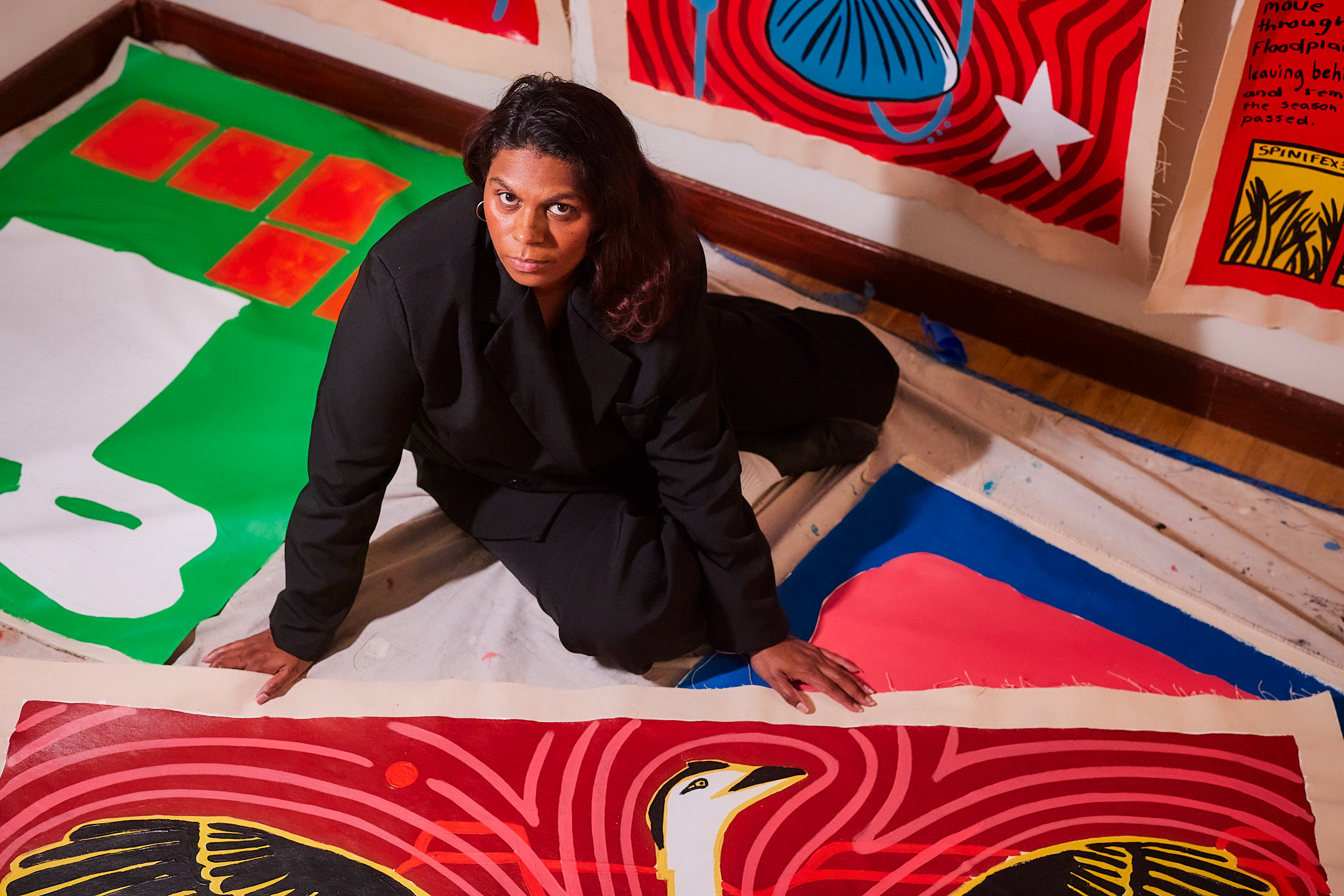
“Storytelling has always been at the centre of everything I do.”
– Molly Hunt
Hunt’s connection to the East Kimberley means being surrounded by stories: family histories, bush tales, ghostly encounters passed between generations.
“Where I’m from, we have so many incredible tales: mythical stories, family stories, ghost stories, stories from the bush, and stories passed around by uncles, aunties and cousins.”
But not all stories need words.
“Stories are not only told through words; they’re held in the shape of the rivers, the escarpments of our cliffs, the wrinkles on my Elders’ faces, and in my chest when I recognise that I am part of a living legacy.”
“Stories are not only told through words; they’re held in the shape of the rivers, the escarpments of our cliffs, the wrinkles on my Elders’ faces, and in my chest when I recognise that I am part of a living legacy.”
– Molly Hunt
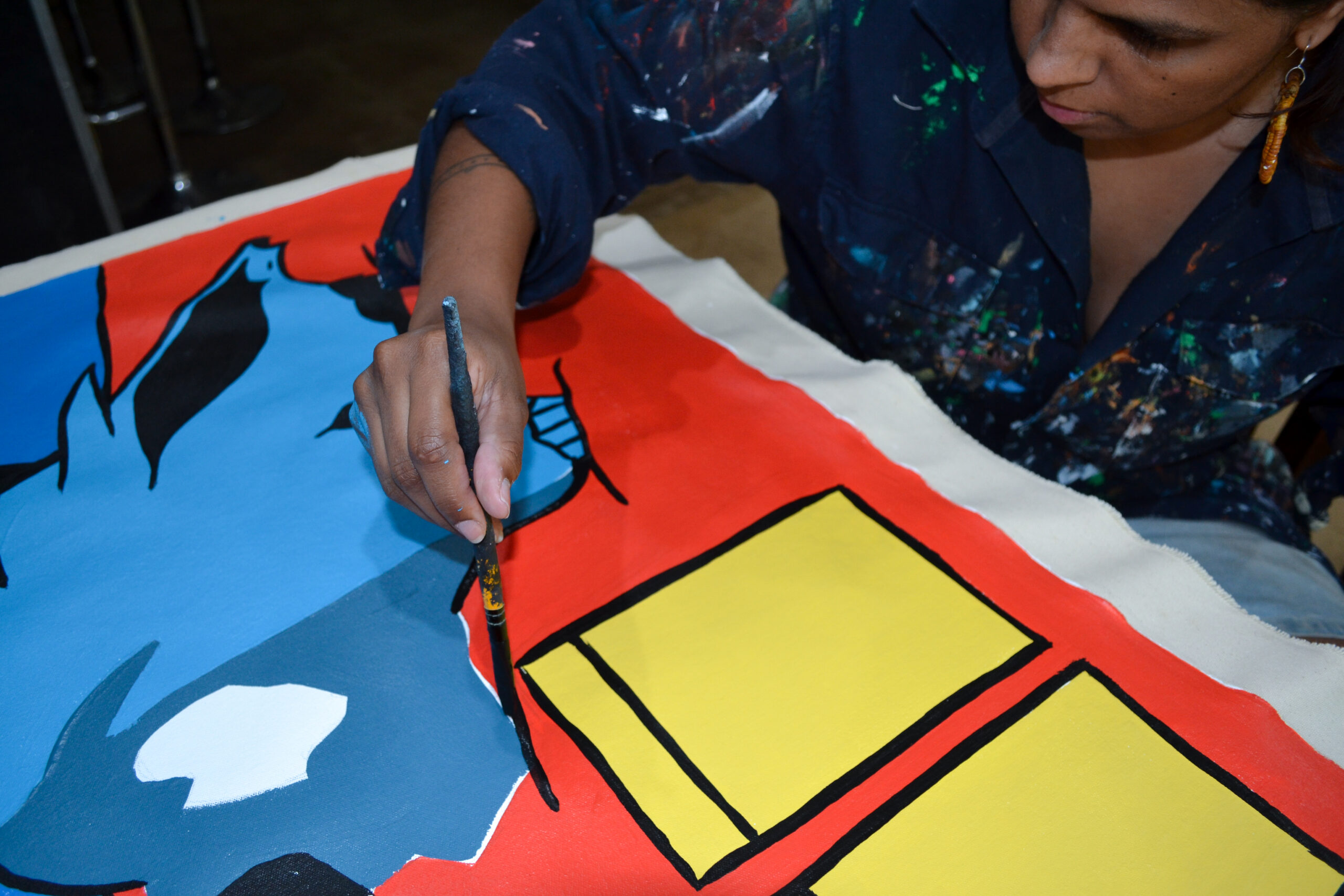
And that legacy lives within How We Move in the Dry, as it draws together the beauty and brutality of the region, leaving those who call it home breathless from its wonder – and its intensity.
“I was drawn to the extremes of nature that we live through in the East Kimberley. Both the Wet and Dry seasons are magical, but they can also be menacing.”
That tension carries the story of the showcase.
“I love that tension between beauty and danger, softness and survival. That’s what I wanted to explore.”
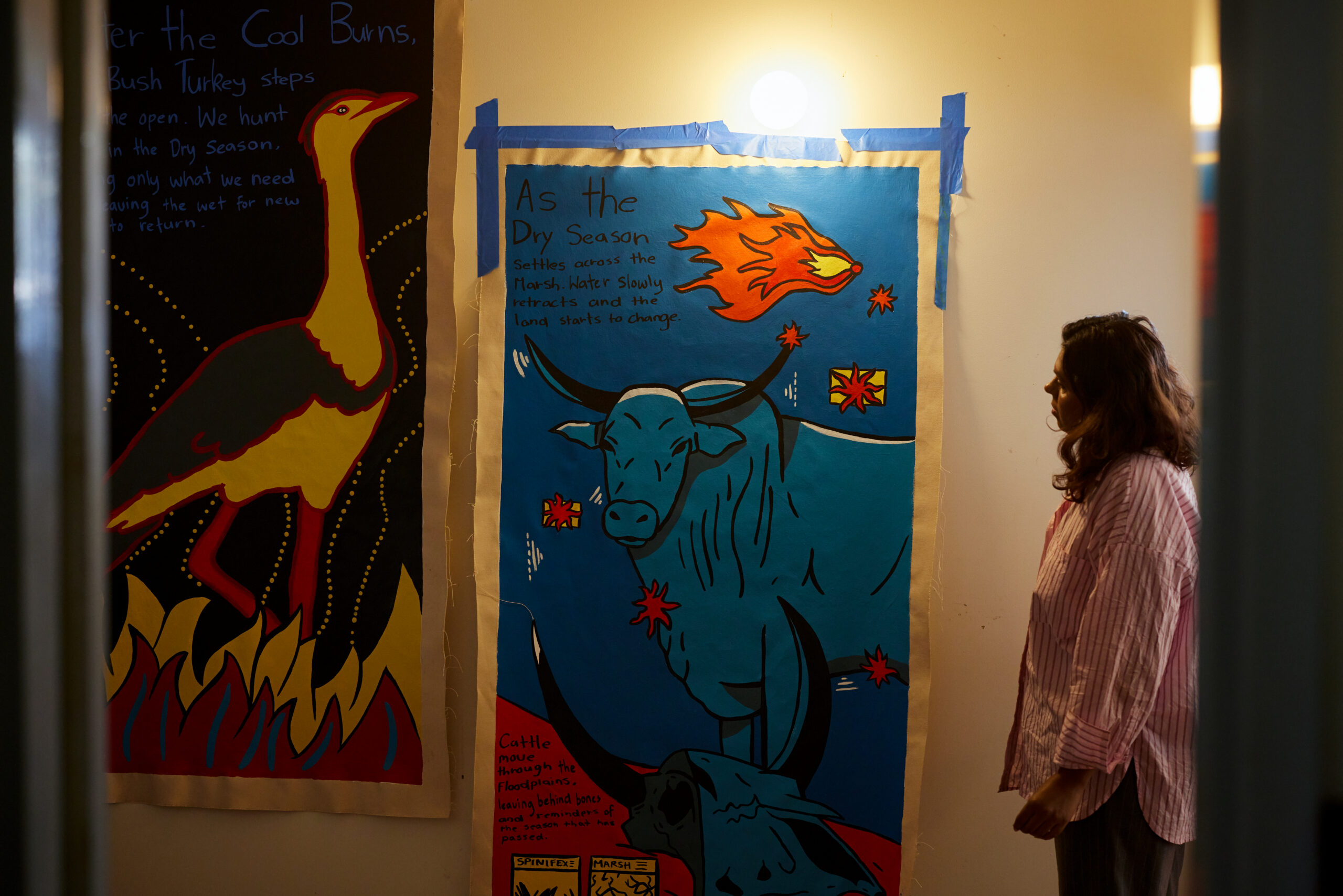
“I was drawn to the extremes of nature that we live through in the East Kimberley. Both the Wet and Dry seasons are magical, but they can also be menacing.”
– Molly Hunt
Memories of fishing trips, camping adventures and family gatherings in the dry season find their way into Hunt’s collection.
“A lot of it comes from memory — being on Country, watching family, seeing how people move through the seasons, fishing, camping, and being surrounded by strong Black women.”
Those women have long been the backbone of Hunt’s community and often centre her visual world. How We Move in the Dry is no exception.
“The women in my work move through heat, change, pressure and beauty with power.”
Once again, their presence underlines the vital role they play in moulding communities, holding stories and carrying them into the future.
“They are part of the landscape, part of the story, and part of the future.”
“The women in my work move through heat, change, pressure and beauty with power.”
– Molly Hunt
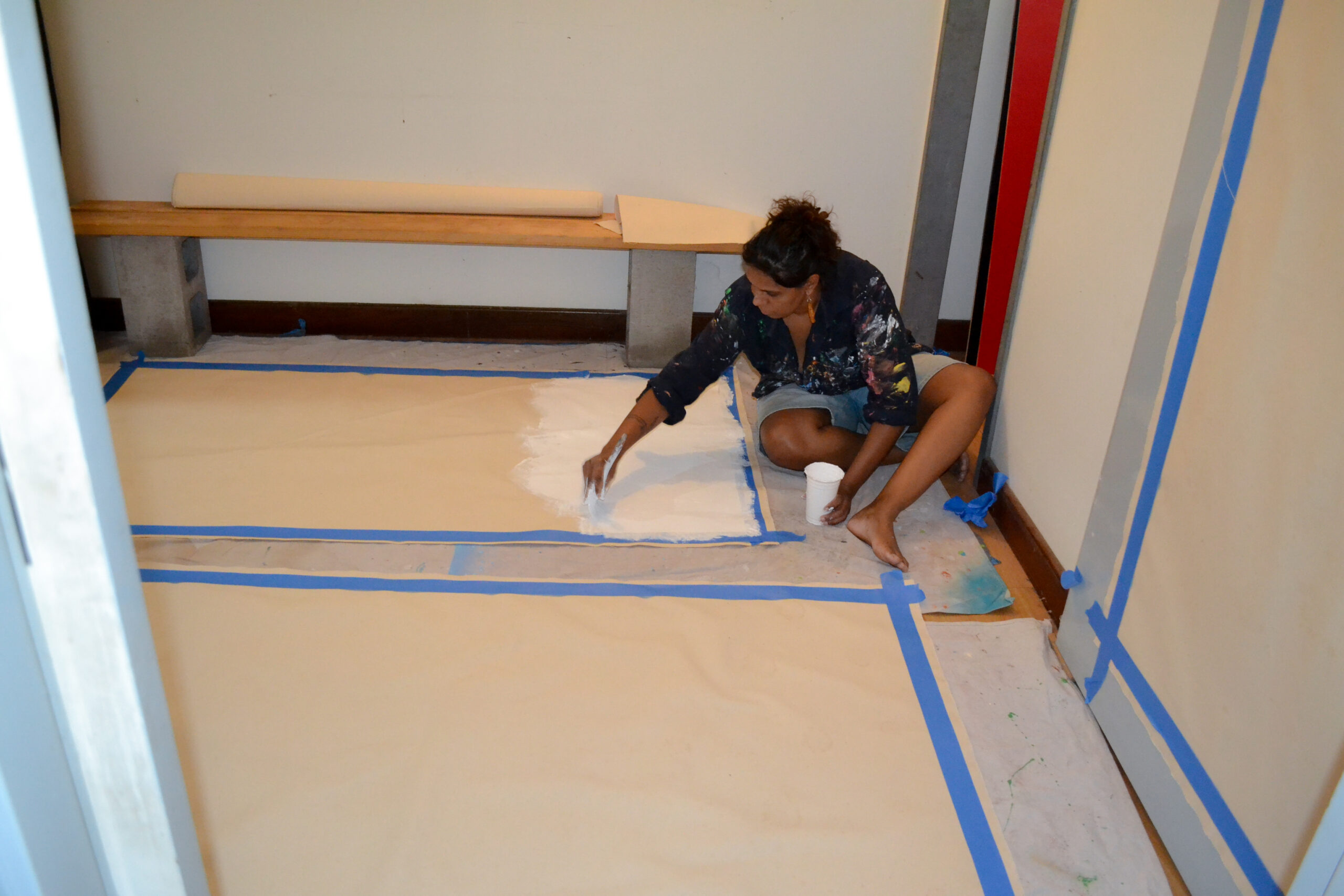
Feet on the ground, soul in the soil, Hunt reflects on returning to Country, an experience she describes as “feeling grounded and centred.”
The exhibition considers place, and our relationship to it, asking audiences to explore their own.
For those in the Kimberley, Hunt hopes they recognise the colours, humour, and stories that shape life there, whilst recognising themselves too.
“I hope they feel seen.”
For those beyond the region, Hunt presents a simple truth: whatever they think the Kimberley is, the Kimberley is always more.
“It’s beautiful, harsh, spiritual, nourishing and alive.”
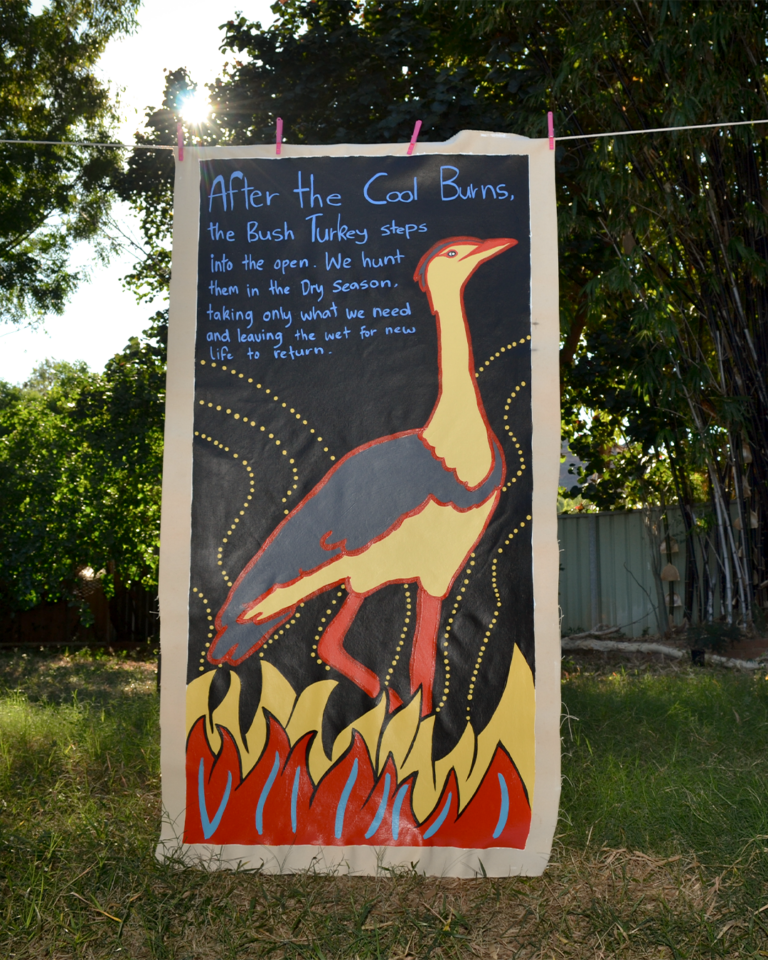
More broadly, however, the showcase gently nudges audiences to look at their relationship with the land.
“How connected are they to the rhythms of the place they call home?”
When the seasons ask for our hand to dance, do we take it?
How We Move in the Dry makes us move with their rhythms, and in doing so, lend an ear to one of our oldest storytellers: the land.
“We move and change with the seasons, we respect them, we flow with them, and in return Country remains abundant and continues to provide.”
Because the land has a story to tell. The question is whether we are listening.