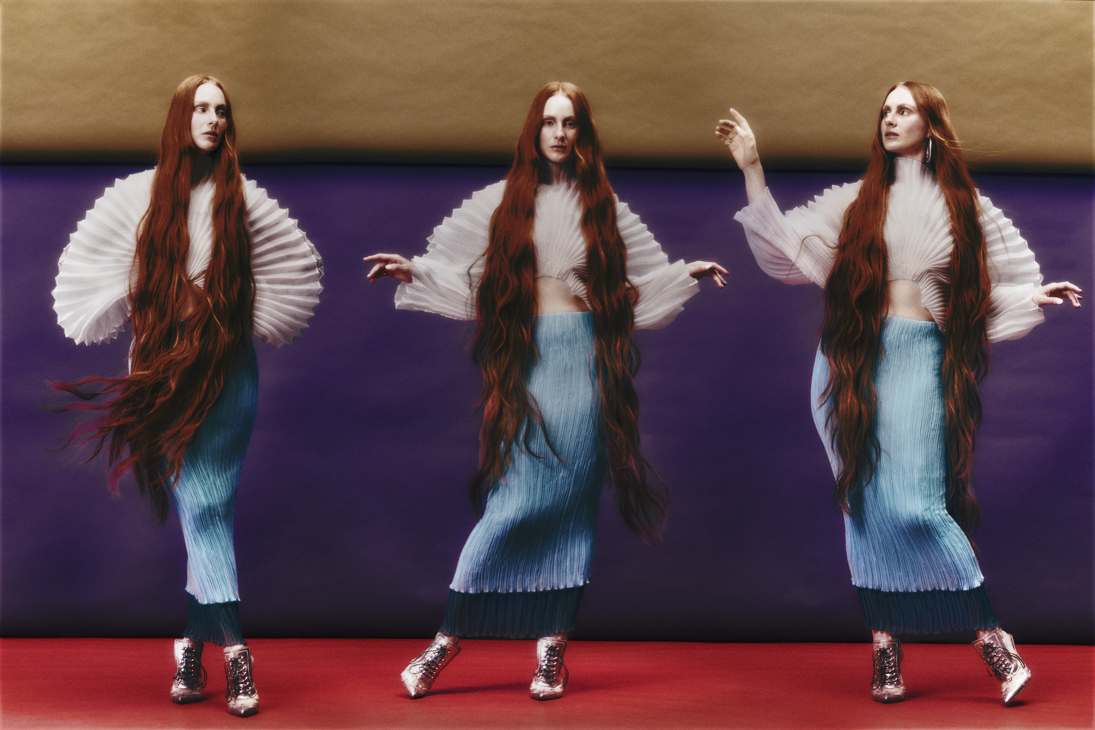
Wings, if you had to explain it in shorthand, is an Independent Fashion Festival. This is mostly true, but it’s not the whole show: Wings’ ideological ambitions are connective. It is the synapse along which discrete creative ideas pulse.
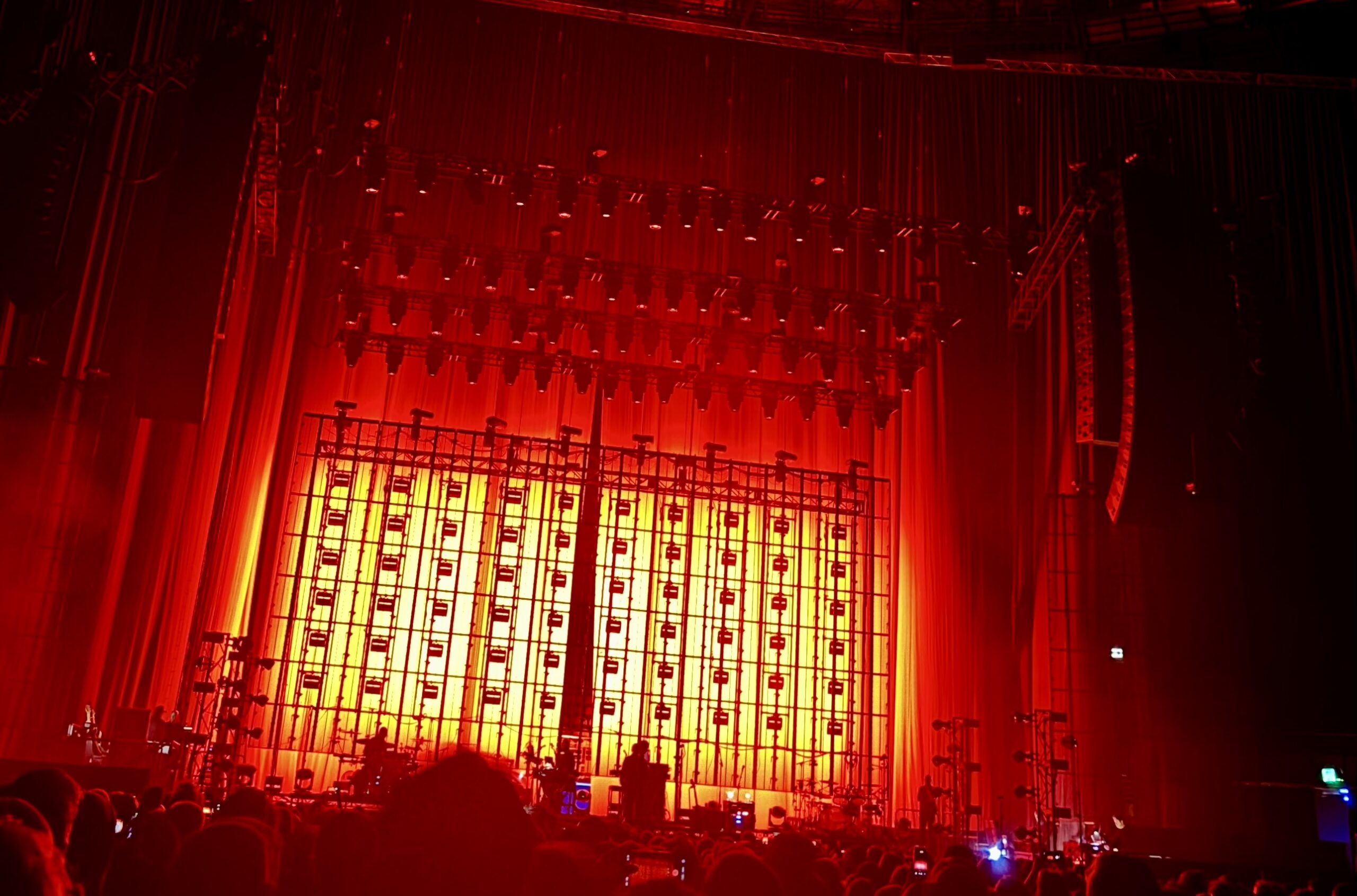
Doing a runway show in the shark tunnel of Sydney’s aquarium is one of the most legible expressions of an idea that Co-Founders Alvi Chung and Dan Neeson have been creating in different forms for years. Nobody had run a fashion show through those tunnels before. You can head down a runway, in all senses, but to eventually take off, you do need WINGS. Yes, this is a crude, obvious metaphor for a cultural venture that is inoculated against typical categorisation. This can only be a good thing. It’s nothing about incomprehensibility, or about the concept requiring prior knowledge in order to digest it (the enzyme equivalent of a license to know). You do not need prescribed credentials to be part of the world of Wings.
You do not need prescribed credentials to be part of the world of Wings.
— Arca

AN UNDERWATER CATWALK
Chung in particular considers the catwalk as a world-in-waiting. It can be something nearer to a film set or an installation piece than a simple procession. “I wanted a more experiential approach to the runway,” she says. Every collection, in her view, is a world to build, and none of these avant-garde expressions are stunts. They are sincere, not self-conscious and not exclusionary. Status is irrelevant; openness is a much better measure. If one encourages wandering as far from the principal idea of a catwalk as possible without losing its original meaning, to showcase the creative efforts of strange, interesting and talented people, then a fashion show is not a glorified corridor with a soundtrack. It can be the message itself (a nod to McLuhan here). What does it mean to walk a collection of clothing inside the glass tube of an aquarium full of sharks, serenely floating above your head as you take it all in?
WINGS: WHY AND HOW
Wings began in nightclubs. Before the festival format, Chung and Neeson were running something of a recurring guerrilla night across the city: three levels, multiple genres, a catwalk breaking out somewhere in the middle of the night and dispersing into music and performance across the floors above and below. This original conception was a response more to the city’s social architecture than to the fashion world itself. The city’s nightlife runs in tight silos, and few of those scenes turn up to each other’s parties. “I wanted to force everyone into one scene,” Chung says. Neeson adds that despite his creative background being more music than fashion, he and Chung have complementary praxis: “To get someone or something they wouldn’t normally come across. That’s what inspires anything.”
DIVERSIFY OR FADE AWAY

Any gatekeeping system inevitably accomplishes entropy.
— Arca
Some creative industries operate on a closed-door basis. The doors are guarded by people whose primary qualification is having previously stood at a different door. This is called credentialing. It is also called nepotism, but only in private. So, a small group of well-connected people sit in a small room and decide who gets to come in. The criteria are not, on close inspection, related to the quality of the work. They are related to who you know, and whether you have the kind of money that lets you pretend, indefinitely, that you do not need any. If you are not in the room, you do not get to do the work. If you do not get to do the work, you do not get into the room. It is a perfect circle. An industry starved for novelty cannibalises itself in the search for it; without diverse input it cannot produce anything new. The same credentialed scenes recycle each other’s references, producing copies of copies of copies, the same everything; and the creative spirit doesn’t do well within a monoculture.
The corrective move is ideologically basic (just cross-pollinate!) but logistically difficult (how?!), and Wings is positioned to be the how. Wings is the synaptic network that creates the conditions under which creatives from the city’s many suburban cultural silos are forced, briefly, into the same place. It’s a kind of nervous system that need not speak for itself in the ordinary way. The historical pattern of creative discipline, specifically in fashion, is that the most incredible designers are the ones who refused to cloister themselves in exclusivity; maybe instinctively they understood that any gatekeeping system inevitably accomplishes entropy.
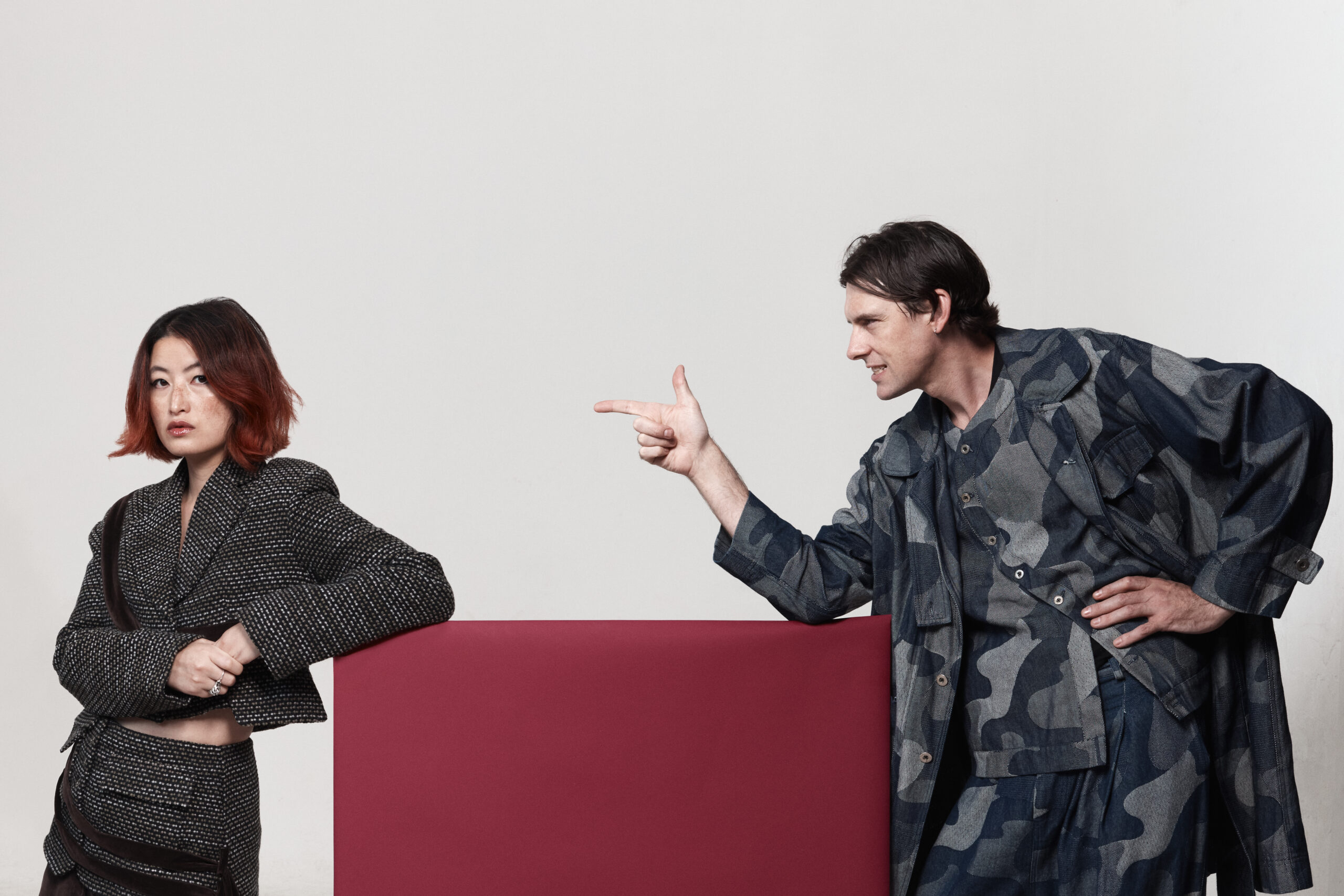
THE CO-FOUNDERS DEMONSTRATE THE WINGS PRINCIPLE
Chung’s parents ran a leather brand out of Surry Hills in the late ’80s, finding success during the brief Australian-kitsch tailwind before succumbing to economic pressures.
Neeson’s father was a migrant musician, part of a generation of artists who built a recognisable sound by playing for local communities, which became an immense culture wash poured lovingly over the entire country’s soundscape. In his telling, that generation did substantial cultural work and got relatively little of it back; the music compounded for the country, less so for the people who made it. Both Chung and Neeson are reckoning with the same problem. How does the cultural energy a generation produces become infrastructure the next generation inherits and expands, instead of evaporating with the people who created it?


AND THEN?
The argument Wings is making (and I’m reluctant to use the word argument about something so generative, but the alternative is to deny that they’re thinking, which they manifestly are: about the way industries and institutions petrify).
If we look at arts and culture as institutional, by nature the structure of an institution relies on its power to preserve itself. An institution, over time, can become a monument to conservation. A less charitable interpretation of this is that the preservation of culture becomes irrelevant, because extending a hand becomes a risk to the status quo, so what’s extended is more akin to a polite consolation: a ceremonial seat at the table.
Wings orients toward the goals of inclusion, diversification, experimentation. It is, structurally, a refusal of any gestures of conservation, because it is extending a hand to anyone willing to take it.