“I think now we both have learned so much… and yeah, the timing was just right.”
At a first glance, FUKHED and Nerve might seem like unlikely collaborators.
One came up through DJing, building a reputation across club spaces before stepping into the studio, translating a deep knowledge of UKG, garage and bass-driven sounds into her own productions. The other moves between rap and production, known for his sharp, instinct-driven approach to beatmaking and a catalogue that leans into raw, high-energy hip hop.
Totally different entry points, different genres, different scenes and yet, somewhere along the way, their paths began to overlap. What makes this collab work isn’t obvious at first. It’s not just shared taste, or even shared history (considering both artists got their start in Brisbane). Instead, it’s something quieter that’s taken time to evolve.
Because FUKHED and Nerve (a.k.a. Lynn and Toby) aren’t two random artists meeting for the first time. They’re two artists meeting again.
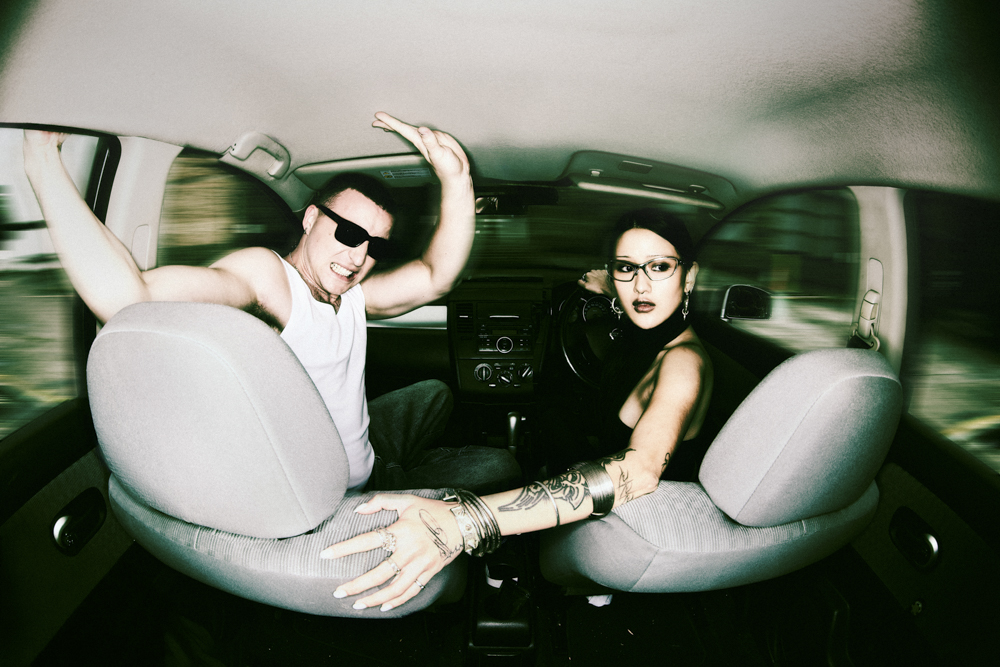
“I didn’t like being told that something’s finished already when it’s clearly not. You know what I mean? I didn’t feel prioritized. I felt like giving up and I talk about that all the time. It’s a part of being creative.”
Sitting down with the pair, Nerve explains “we actually met at the end of 2019, just like a random event that I was playing at.” Turning to FUKHED he adds “and then I think that was like, right at the start of your like, DJ journey.”
FUKHED laughs. “Yeah… I think so. Or maybe just after. I wasn’t DJing seriously until like a year in.”
In those beautiful, pre-pandemic early days, the connection was loose. The exact kind of overlap that happens all the time in cities like Brisbane where parallel creative lives are constantly moving alongside each other in close vicinity. From playing together early on, almost by accident, the two artists went their separate ways in pursuit of their craft. FUKHED moved to Sydney. Kept DJing. Started producing more seriously, refining her taste not just as a selector, but as someone beginning to shape sound from the ground up. Nerve continued building in his own lane, sharpening instinct, learning through repetition, figuring out what felt right rather than what fit neatly.
By the time they found their way back into the same room, they weren’t starting from scratch. They were meeting each other with a clearer sense of who they were, and what they were trying to make.
“I came back over Christmas to visit my family here” explains FUKHED. “And then we were just like, yeah, like, let’s link and just have like, just a fun session, you know.”
Nerve adds “when we were doing the session, it was like, I opened the thing up and we started working on something. And then Lynn was like, Oh, can I jump on? And I was like, yeah, for sure. And then I sat back and realised that 30 minutes had gone by and she’d just done heaps of crazy shit that I’ve never seen before… It feels like that was kind of our first session making stuff together properly, because it seemed like there was a much clearer idea of what we were making. The stuff that we both like, like the stuff that I like in rap beats or grime or whatever that Lynn likes is pretty similar. It’s just good drums and good sound selection.”
Despite the joint effort to grow and refine their skills in production, the real glue between FUKHED and Nerve isn’t technical, but relational. “Being comfortable… I know how you work and you kind of know how I work as well,” FUKHED says to Nerve. “Now it’s definitely more tailored, you know, and more refined overall in how we help each other… and just trusting the other person too, you know.”
A shared rhythm that doesn’t need over-explaining. A sense of when to step in and when to step back. But more than that, crucially, FUKHED and Nerve have given one-another permission to have fun, which might be the secret to every great studio session.
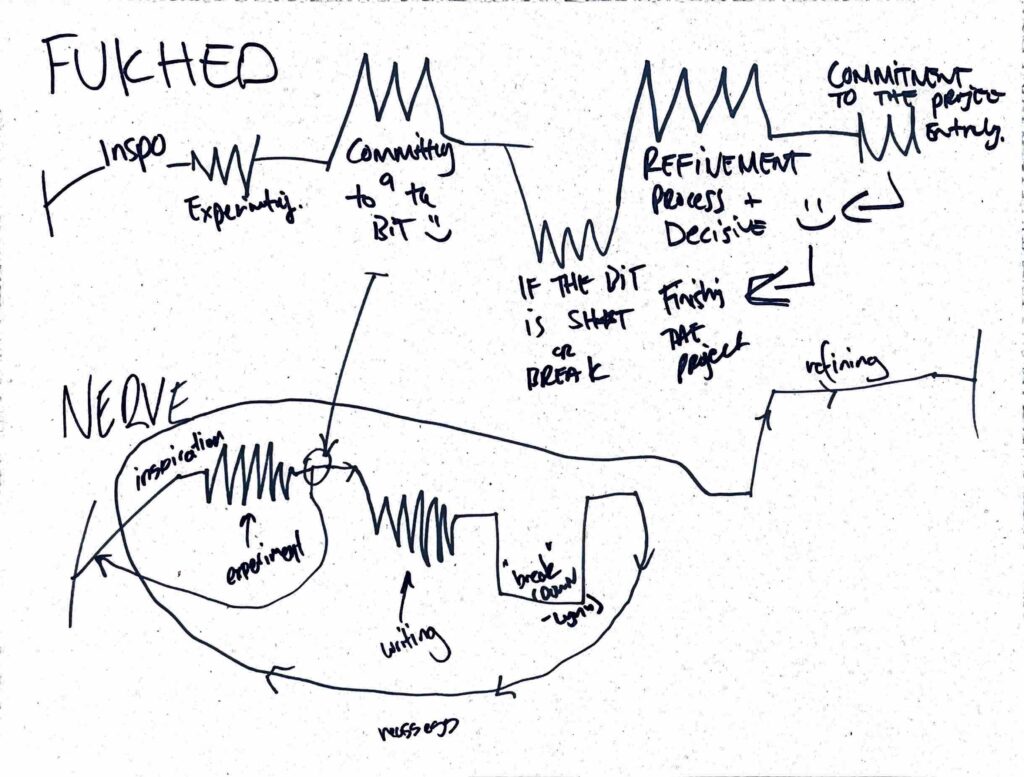
“I’m so grateful for us working together because, yeah, we hadn’t seen each other in years” says FUKHED. “During that time, I’d done sessions with, you know, a lot of people. Friends or just people… my team were like, yeah, do a session with them. But the thing is that when you’re still starting out, it’s hard for you to articulate when something’s not right because it’s just a feeling to you, but you don’t know how to articulate that.”
“It can be especially difficult because it feels like trust has been broken within those sessions. And it made me kind of disheartened and I didn’t want to do any more sessions because I was just getting shut down almost and it didn’t feel free to experiment.”
“I didn’t like being told that something’s finished already when it’s clearly not. You know what I mean? I didn’t feel prioritized. I felt like giving up and I talk about that all the time. It’s a part of being creative.”
Not only describing a run of difficult sessions, but a moment where the process itself stopped feeling possible, highlights the specific frustration of an artist still finding her footing. Navigating the gap between instinct and articulation can be difficult, and when that instinct is repeatedly shut down, it becomes harder to trust. When FUKHED stepped back into the studio with Nerve, the shift was immediate. Thinking about the impact of their collaboration, FUKHED says “I don’t know how my music career would have looked if that didn’t happen.”
It is a simple statement, but one that carries weight.
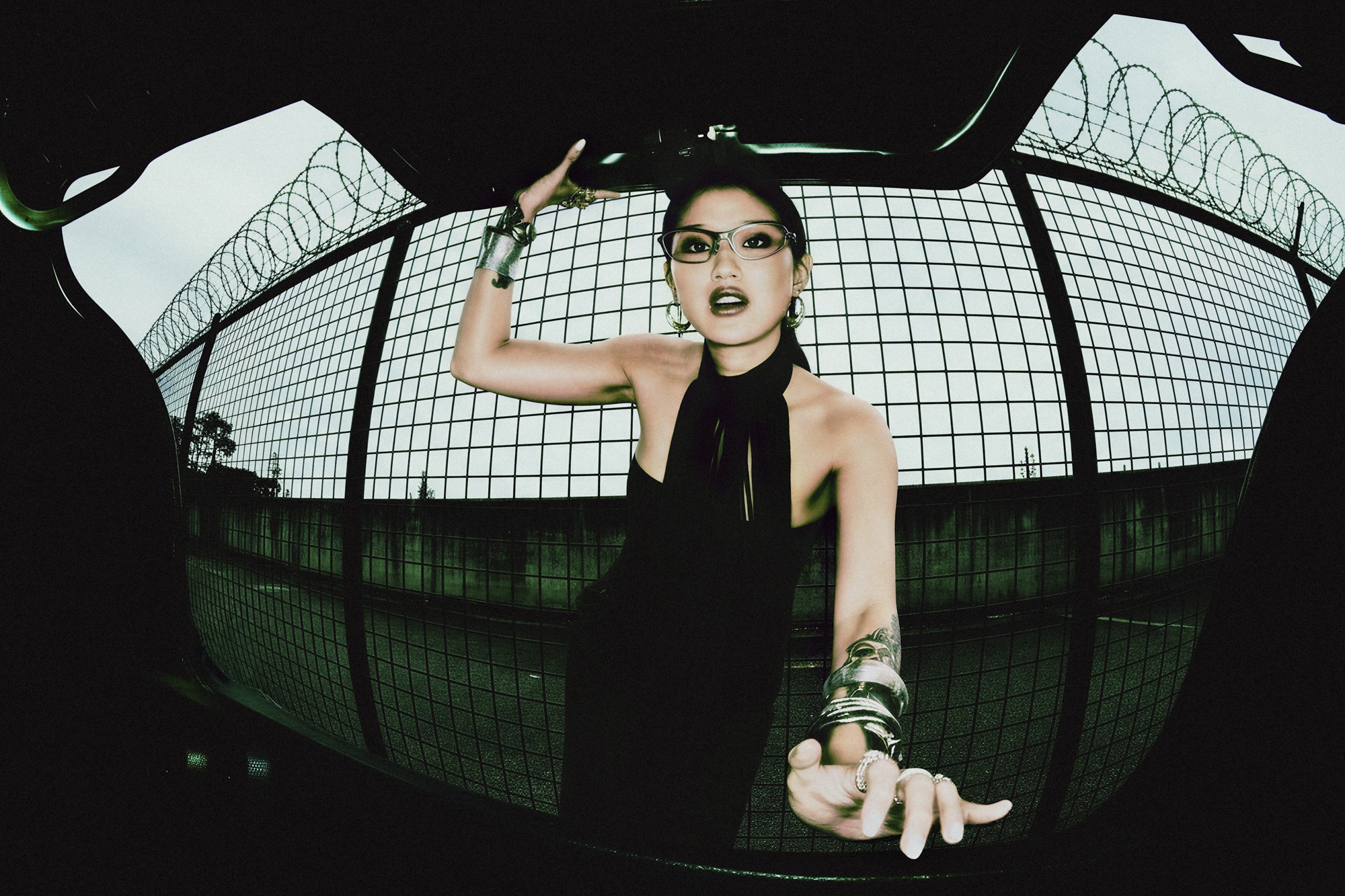
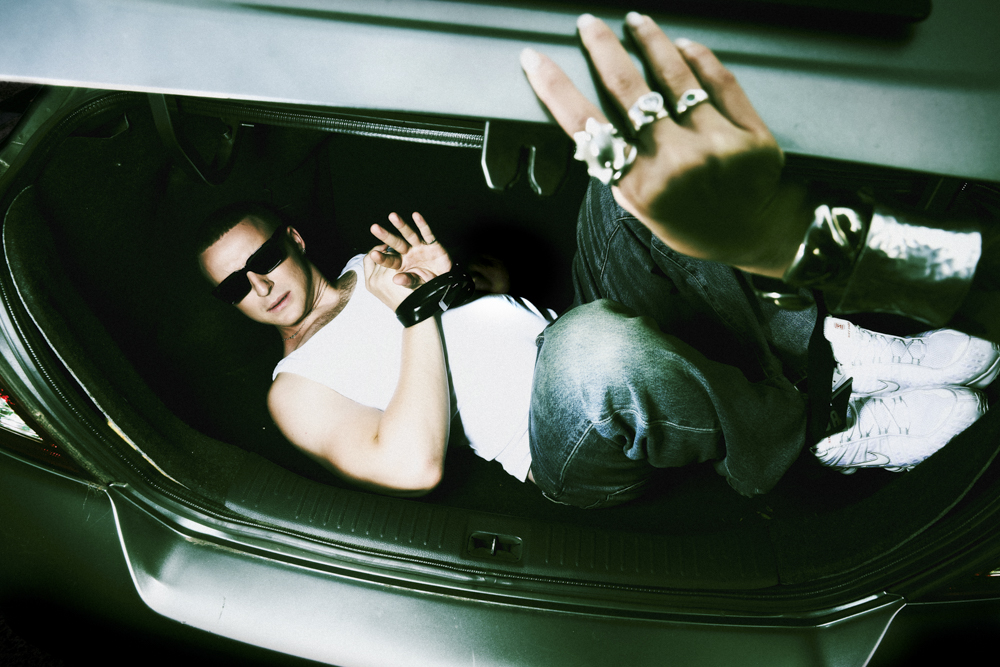
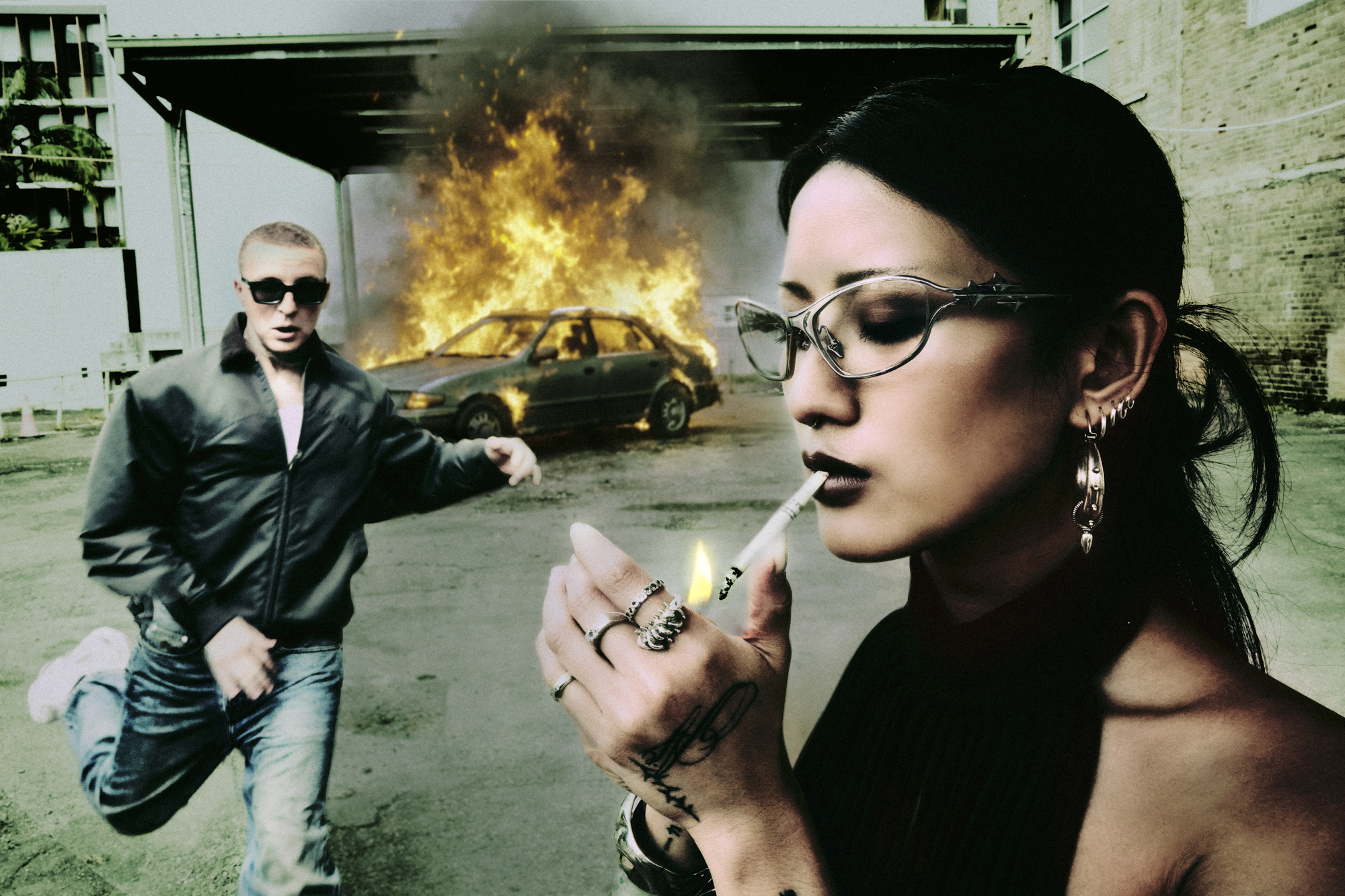
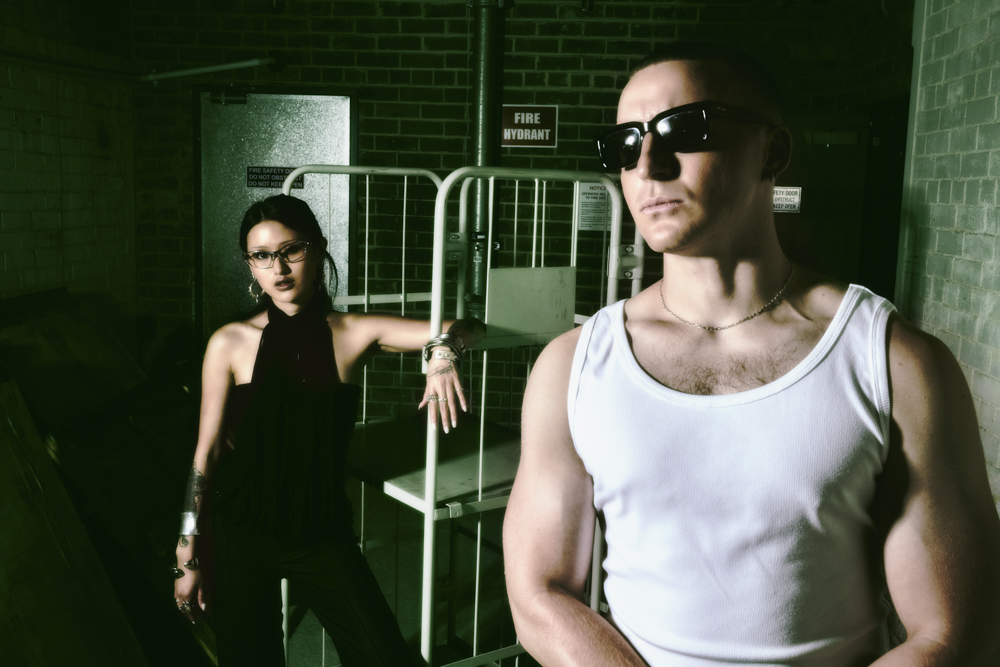
Because in a music landscape that often prioritises precision, productivity and outcome, FUKHED and Nerve’s collaboration moves a little differently. Their shared way of working allows for uncertainty, for experimentation, and for the kind of instinct-led decisions that cannot always be explained in the moment. It’s a collaboration less concerned with defining itself, and more interested in what happens when two artists meet at the right point in their own evolution.
Sometimes, the most meaningful collaborations are not always the most obvious ones, but the ones that arrive at exactly the right time. When both artists have spent enough time in their own worlds to recognise what they need from someone else, and when they are open enough to let that exchange shift them.
FUKHED and Nerve celebrate their differences. Different references, different approaches, different ways of understanding music. But instead of creating friction, those differences have become the thing that keeps the work moving.