“I wouldn’t be fab if I grew up in Bondi!”
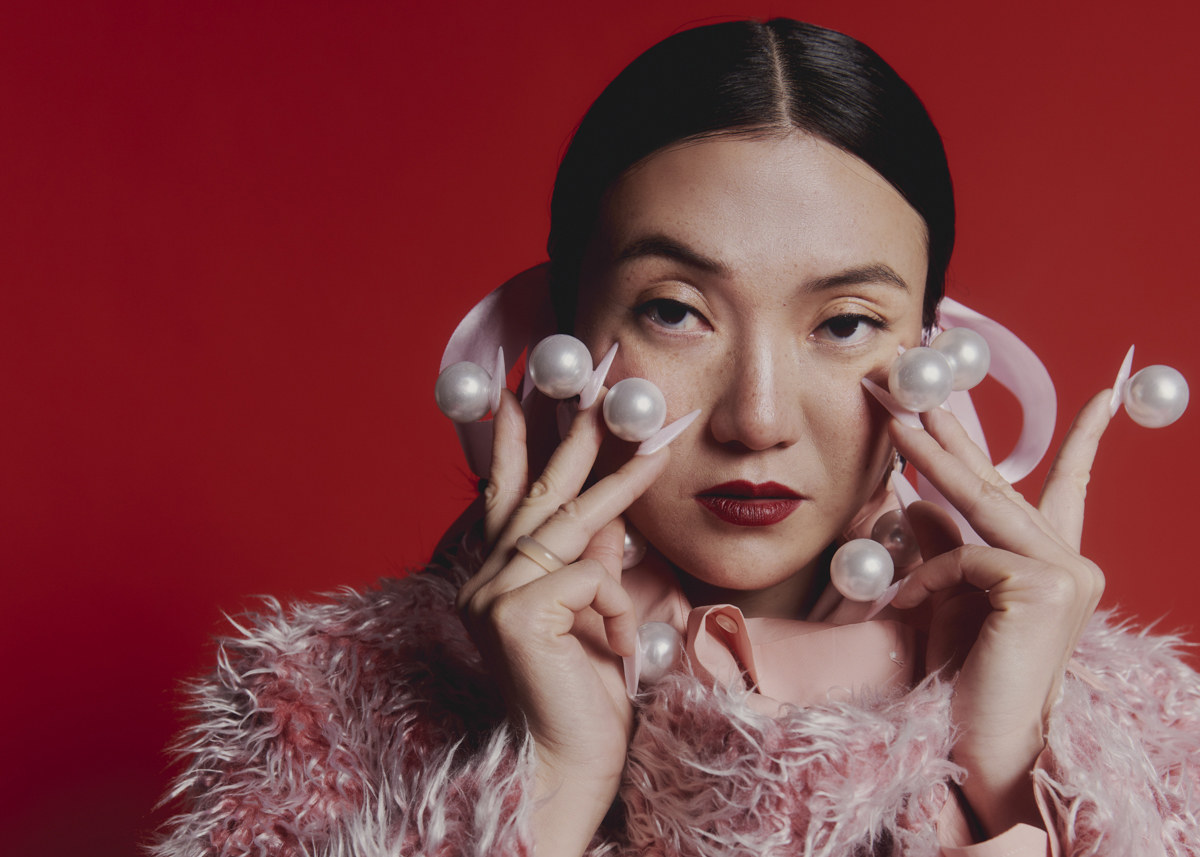
Proudly hailing from the Western Suburbs of Sydney, DJ Kilimi is a Tongan queen in the Eora club scene – a worldwide woman with a worldwide sound that blends Ballroom beats and nostalgic rhythms to keep the dancefloor moving.
Between a packed schedule, the DJ sat down with DRAFT. to talk music, the Ballroom scene, fashion, and more – a conversation I can only describe as “real bitch to real bitch communication.” I hope that between the words, you can hear the cackles, picture the knowing glances, and feel the perfectly timed “mmm’s.”
Influences
As two proud Pasifika women – me, Sāmoan, and her, Tongan – I knew our shared connection to culture would come up. I just didn’t expect it to happen so quickly. With my very first question, Kilimi jumps right in: “Being Islander…”
I asked about her relationship to music, and – like many Tongans – it’s deeply rooted in culture. “…there’s not much [written] history before Christianity,” she continues. Instead, stories live in the voice, in music, in memory. For Kilimi, singing in church in childhood was a natural extension of that tradition.
But by high school, her taste began to expand. “That took a backseat – doof doof was the vibe,” she laughs. Alex K, Avicii, Unique, and hardstyle became the soundtrack to her teen years, set against the backdrop of a booming festival era – Big Day Out, Future, Creamfields, Stereosonic.
Before long, Kilimi was inspired to start DJing herself – and in 2018, she played her first ever set. From the start, she embraced all her musical influences, blossoming into one of the brightest talents in Eora’s club scene, DJ’ing major events like Heaps Gay Pride and Wings Independent Fashion Festival.
“Oh, I’m queer boots”

Kilimi’s creative expression helped her realise who she was, even before she had the words for it. “I DJ’d ballroom for my first set – [but] I didn’t even know I was queer.” Being behind the decks, surrounded by queer crowds, helped something click. “Oh, I’m queer boots,” she laughs.
Her connection to the Ballroom scene unfolded in a similar way. Since the start of her career, Kilimi had been DJing for Ballroom events and surrounded by community – but hadn’t quite connected the dots. “I’d say I was ballroom-adjacent,” she laughs. Raised in a close-knit blood family, she never felt she needed a chosen one – until her best friend Leah, the founding Australian Mother of the House of Iman, put it plainly: “You’re muva, you’re sister.” Now, Kilimi is a proud member of the Australian House of Iman.
Stepping out from behind the decks to do her first “walk” was nerve-wracking. “It’s beckoning me to come out of my shell as much as I need it,” she says. But being in community with other queer Tongans and Sāmoans has inspired her. “How I dress – even the songs I pick – have changed,” she reflects.
Kilimi points out that queerness is nothing new to cultures across the Pacific – it’s ancestral. “Fa’afafines (Sāmoan word meaning “in the manner of women”) are so normalised in our cultures,” she says. The fervent homophobia and transphobia we see today? That’s not our inheritance. “It’s colonial.”
Being from the Area
In one of Kilimi’s SoundCloud mixes, she jumps from a Ballroom track to Sydney Yungins’ “Eshays” – a shift that feels entirely her own. Coming from the Area, she embraces the Western Sydney group with pride. Mixing something seen as hypermasculine with something feminine might seem unexpected, but for Kilimi, it’s natural. “I can come from this space and be queer,” she says.
“I’m sorry, I wouldn’t be fab if I grew up in Bondi,” Kilimi laughs. “The sets would be boring.” Just as her music told her who she was, her sets tell the people on the dancefloor who she is. “I’ve always made it a point – in everything I do – I’ll always be an Area girl.”
So, when I ask what makes a good DJ, it’s no surprise that Kilimi responds, “You can tell where they’re from and who they are.” She praises DJs like C-FRIM and Lady Shaka for incorporating music from their cultures. “Their culture steers the ship – you can hear it.”

Style and shame
While Kilimi is interested in making her own music one day – especially “infusing Tongan vocals and drums” – her focus leans to fashion. “Creative direction and design,” she says.
She wants to fill a gap. “I rarely see Tongans up in the space.” Like music and Ballroom, fashion offers another way to express her culture and pride. “Our culture makes us look at things differently – that’s something I’d like to portray in design and fashion.”
Those who’ve seen Kilimi’s personal style know her fashion plans come as no surprise. Feminine, sexy, sheer – her looks turn heads. But the journey to plunging necklines and mini skirts wasn’t overnight. “I used to wear tomboy clothes,” she admits – an admission that’ll have many girls from the Pacific nodding with a knowing “mmm.”
Like many Pacific communities, modesty in Tongan culture is tied to morality, virtue, and faith – a legacy of European missionary influence. “What you wear reflects your family line,” Kilimi explains. Her tomboy phase was a way to keep the peace. “I didn’t want to be disrespectful.”
But there’s a difference between choosing modesty and shrinking under the weight of shame. “It has our people by the neck,” Kilimi says. Over time, that shame began to lift as she found herself in the Ballroom scene and grew “more comfortable with being a woman.” Now, she’s unapologetic.
“Fuck off the shame,” she laughs. “I’m a Tongan woman – God made me this way… and it’s for me. I’m not allowed to be showing that?”

Setting the path
I have this vivid memory of Kilimi mid-set, bopping freely to the music in a lacy white plunge dress, surrounded by stiff, masculine-presenting men. At first, the contrast tickled me – I found myself thinking, these men don’t want to dance? But then I began to wonder what it felt like for her. “I don’t care for their approval. I play for the gays,” she says. “But it is still unnerving.”
Though confident in her femininity, the DJ world remains very male-dominated – and straight. Men might respect Kilimi’s song choices, but those compliments don’t shield her from unwanted attention. “Let’s be honest,” she shrugs. “They don’t care about who you’re playing. They’re staring at you.” As the age-old story goes, women can be praised for their craft – and still reduced to their bodies. Because that so-called respect doesn’t always come with the real thing.
When I asked how she manages that tension, Kilimi didn’t hesitate. “Showing up makes a difference for other people,” she says. “When they see my name on a flyer, there are Islander girls who think, I can do that.”
And that, right there, is the crux of it. The why behind so much of what Pacific women do – so deeply woven into who we are, you’d think it lived in our hair, our skin, between our teeth. We show up so those who come after us know they can, too – a throughline I’ve seen again and again in conversations with other women of colour. We prioritise legacy.
Where does that leave us? I’m not sure – but here’s what I know: Kilimi is more than a DJ. She’s an ancestor in the making. With every set, every walk, and every moment she claims, she shows the world what it means to be her – and we’re most grateful to move alongside her.