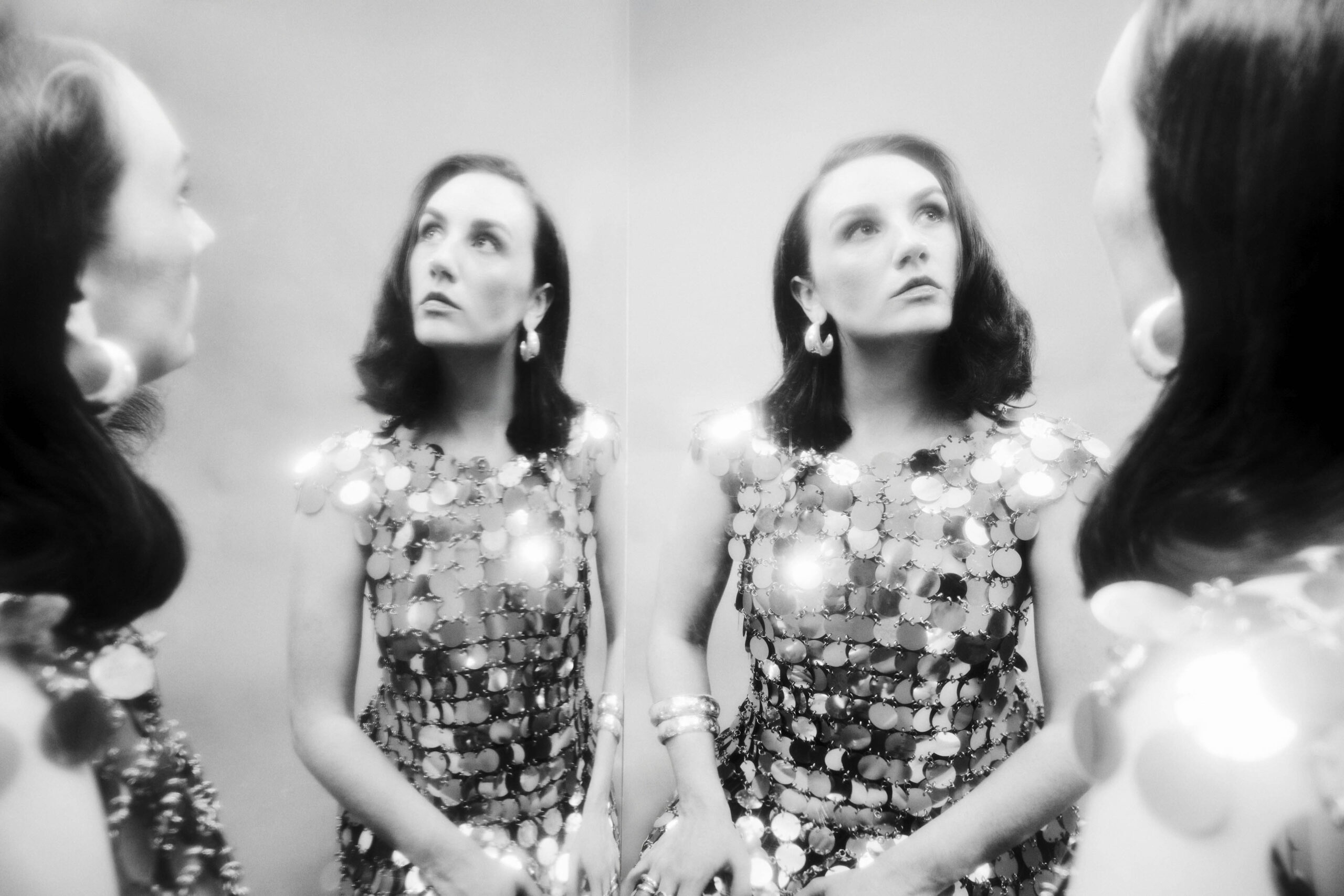
There’s a moment during our conversation where Obongjayar (OB for short!) says something so casually profound it almost goes unnoticed.
“Don’t get in the way of the groove.”
He says it like it’s obvious. A phrase you’d stitch onto a jacket or whisper to yourself before walking on stage. The more we talk, the more I realise it isn’t just an insight on music. It’s a philosophy. A way of moving through art, and maybe through life, without overcomplicating what’s already alive.
As the Nigerian-born, London-based artist gears up for his first Australia and New Zealand tour since 2023, it’s clear something has shifted. Not in volume or ambition, but in clarity.
His latest record, Paradise Now (and its extension Paradise Now & Forever), doesn’t feel like an artist trying to outdo himself. It feels like an artist who has figured out exactly what needs to be said and, more importantly, what doesn’t.
“I think I was very confident,” he tells me when I ask about the space he was in making this album. “The whole plan was to write songs… not try and break the wheel or reinvent the wheel, but follow a structure that has existed for eons of years and try to put myself within that. I wanted to trim the fat lyrically as well. I tried to condense the ideas or the perspectives down to things that were seemingly simple but just packed a lot of punch.”
This type of precision is anything but simple.
“I felt like with the earlier stuff, [I was] trying to write in a profound way but over overthinking about, you know, like ways to say things that might go over someone’s head that only necessarily I can understand… If you get it you get it type thing. I don’t think there’s anything wrong with that and I still write songs like that, but with Paradise Now, I wanted to write a record that any five-year-old can listen to and be like, okay, I kind of get what this motherfucker’s saying.”
The ambition is not to dilute the emotion. It is to distill it, a skill that OB has been quietly developing for a long time now. In earlier tracks like ‘I Wish It Was Me’ or ‘Wind Sailor’ from his debut LP, Some Nights I Dream of Doors, lyrics held enormous emotional contradictions inside a single refrain. Love sat beside envy and devotion tangled with insecurity. The feelings were large and layered.
With Paradise Now, that depth and emotional precision remains. It simply moves differently.
“For the passive listener, those songs can seem like they’re just a nice little fun thing,” OB explains. “Which is fine. That’s kind of the objective. But they pack a lot more weight than they seemingly do.”
The groove becomes the entry point. The body responds before the brain fully catches up. On tracks like ‘Just My Luck’ and ‘Born in This Body’, there is bounce and immediacy. Beneath that surface sit heavy themes of identity, fate, self perception and conflict. You can live with the rhythm before you realise what the lyrics are asking of you.
“I wanted to get the listener immediately on the groove and on the bounce of it,” he explains. “And then the more you listen, the more you take it in.”
When I ask OB about his musical background, he shrugs gently.
“I haven’t really been trained musically. I just vibe.”
But the word vibe undersells what he is describing. It is instinct. It is taste sharpened over years of listening. Influences absorbed not as reference points to imitate, but as emotional markers.
“I rely on my taste,” he says. “When something hits, your taste lights up. You recognise the feeling. When I sit down to make a song I’m not thinking about ‘Oh I want to do a thing like Prince or I want to do a thing like Bowie’… You can recognize where those ideas might be coming from and that makes you understand that you’re going in the right direction because you get the same emotion that you get when you listen to a song that you really love.”
For OB, emotion is the compass, less about theory and more about recognition. It is a surprisingly grounded way of working for an artist whose sound stretches genre and geography. Songs weaving gospel textures with afrobeat rhythms and alt-pop structures aren’t the result of a checklist of references, but rather a reflection of the artist’s inner world as experience is absorbed, internalised, and then filtered through instinct.
“You know what makes you fall in love,” he says. “You know what makes you feel something. When you play a chord or write a lyric and it hits that part of your heart, you know you’re on the right path.”
As he prepares to bring these tracks back to Australian stages, the conversation shifts naturally to performance. Or rather, what he prefers to call feeling.
“I hate saying the word perform,” he tells me. “I think people, what they come to see is you feel those songs that you wrote. They want to see you. They want to see the feeling live”
“A few years ago I was watching this Jorge Ben Jor video on YouTube. It’s like him just playing in a little bar and his voice is cracked up and he’s just going for it. You’re not paying attention to, I guess, quote unquote, the voice being ‘bad’. You’re paying attention to the feelings. I can tell that he wrote those songs and he felt those songs and he felt every moment. And that’s what you go to see… In terms of performance, I’m not trying to do, like, a massive crazy explosion. You don’t need any of that. The explosion is from within.”
It feels fitting that he describes the explosion as internal, because that is what Paradise Now ultimately is. Not necessarily louder or bigger (there’s always a Fred Again remix for that…), just clearer. A record that allows the groove to carry the weight of meaning and emotion instead of forcing it forward.
In a cultural moment that often confuses excess with impact, Obongjayar has, almost radically, chosen refinement, stripping back what is unnecessary so that what remains can hit harder. As he returns to Australia, it will not be spectacle that defines the show. It will be recognition. The shared understanding that sometimes the most powerful thing an artist can do is get out of the way of the song.
“Don’t get in the way of the groove.”