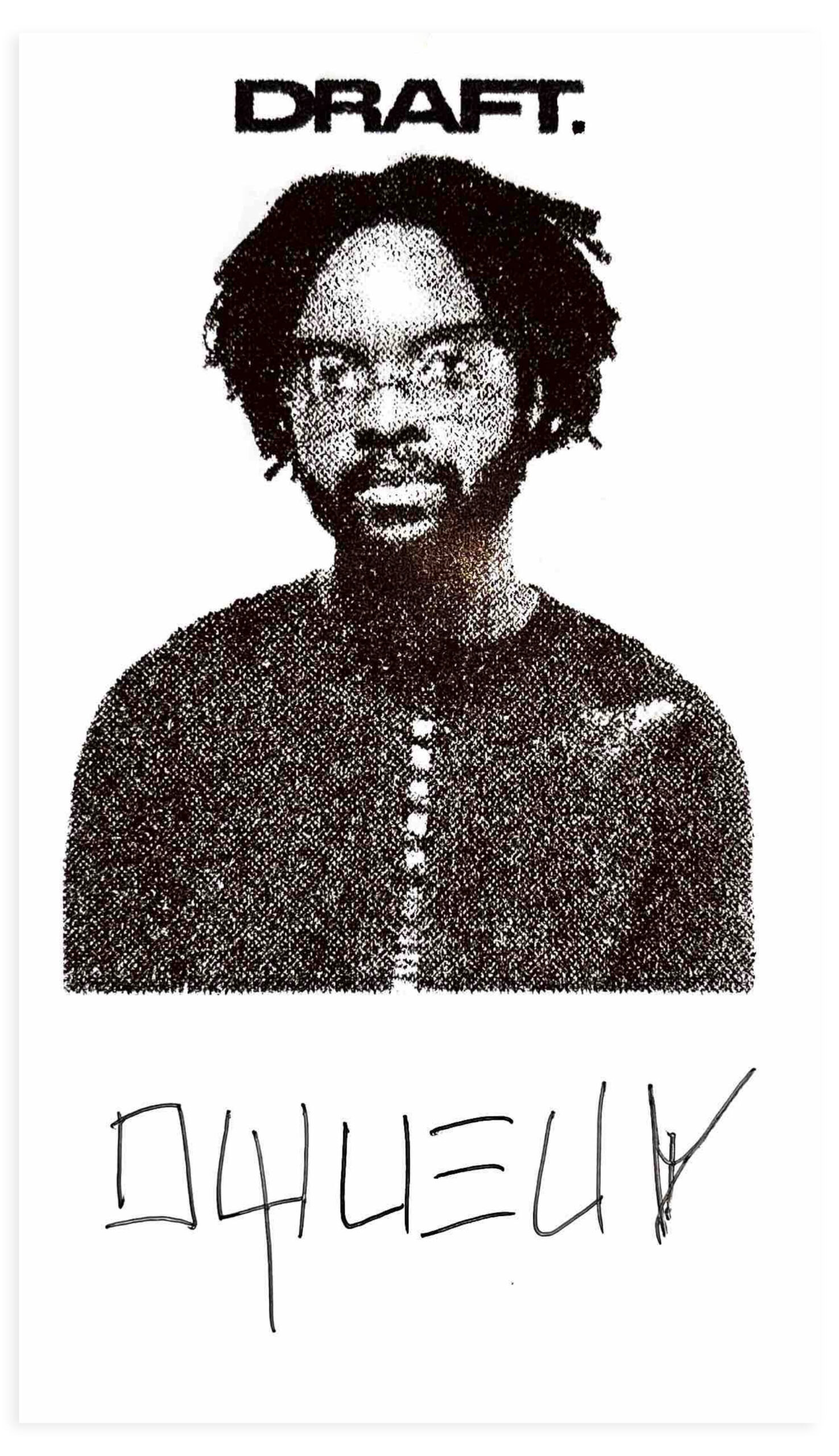
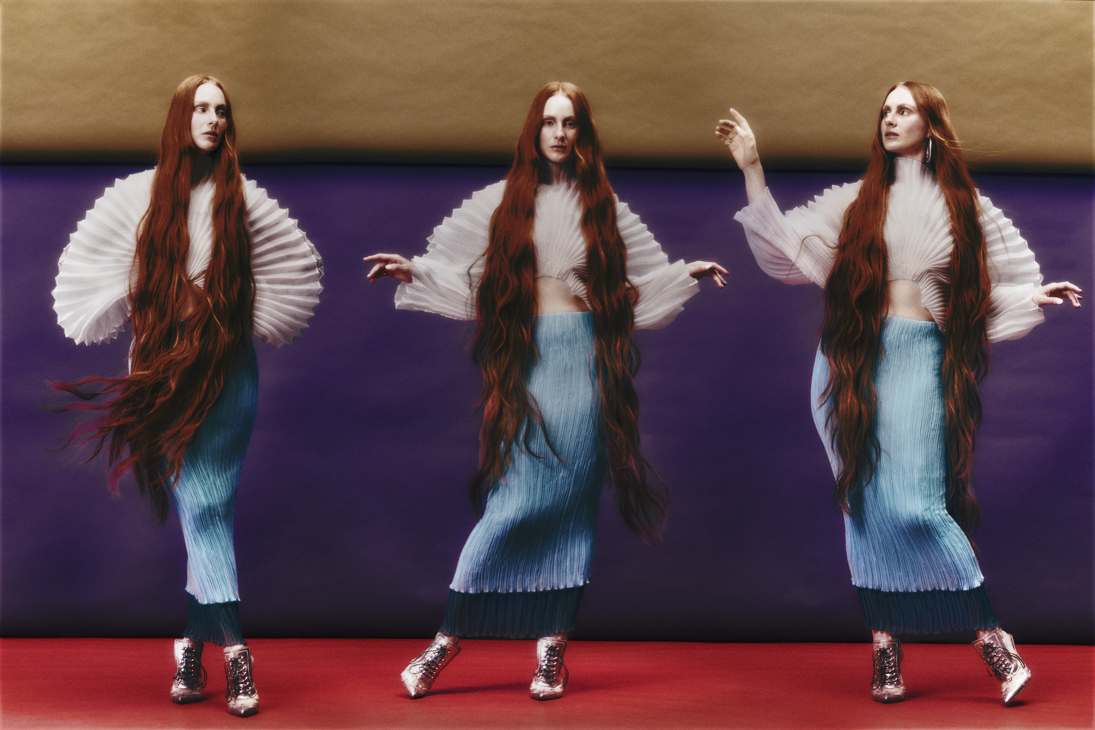
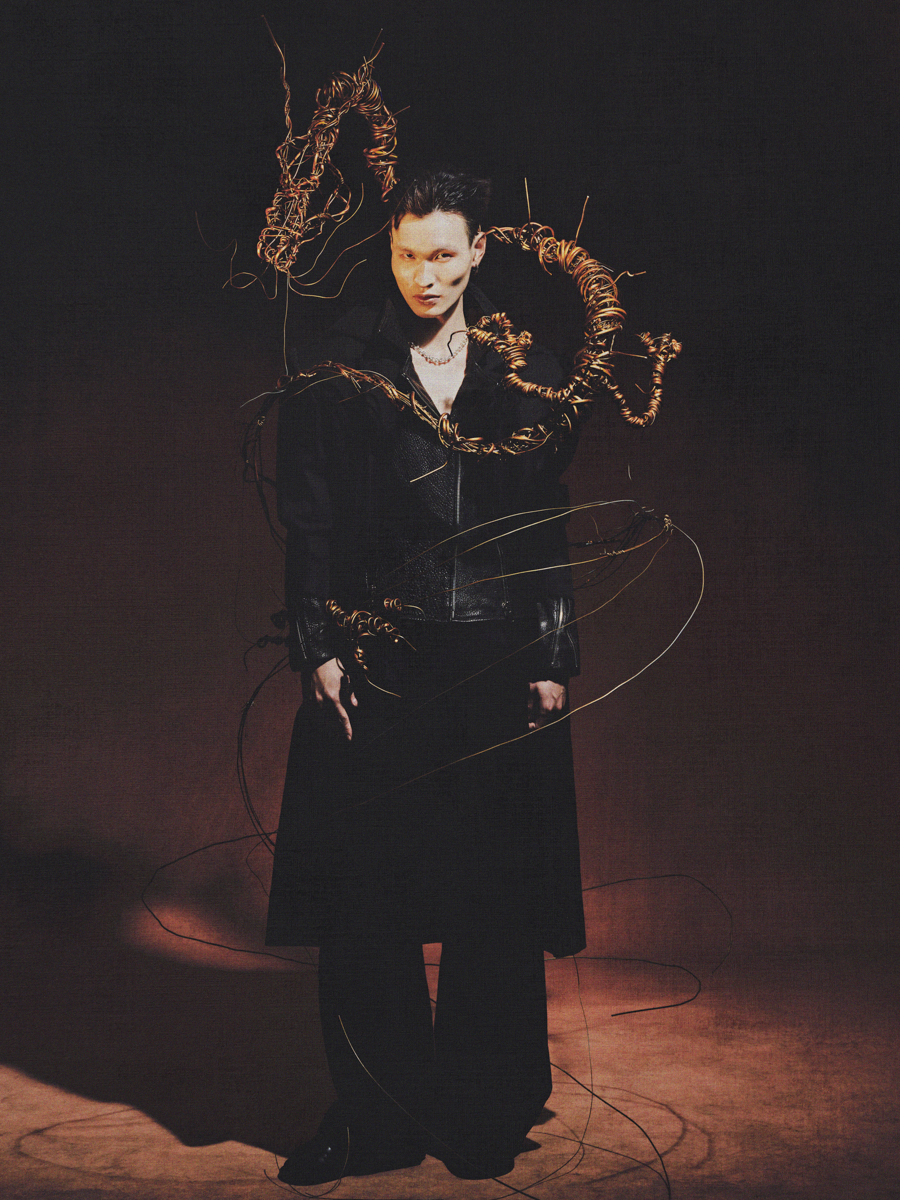
For years, Genesis Owusu has been building worlds to help make sense of this one.
Black dogs. Roaches. Characters that could carry the weight of real life without ever naming it directly. Allegory gave him distance from reality, a way to make it more surreal and, in some ways, more manageable.
But for his new album, REDSTAR WU & THE WORLDWIDE SCOURGE, that distance is gone.
Sitting down with the Ghanaian-Australian artist, the sincerity is palpable. “I honestly felt like in this time and space, I didn’t have the privilege to be ambiguous anymore”, he explains. “It felt like there was a wave washing over the world. Hatred, greed, far-right ideology becoming cool again. Washing over like a plague. A worldwide scourge. The album is about the here and now, the trials and tribulations and the chaos and the paranoia, but also about community, and regaining our ability to see the humanity in one another.”
“In this time and space, I didn’t have the privilege to be ambiguous anymore.”
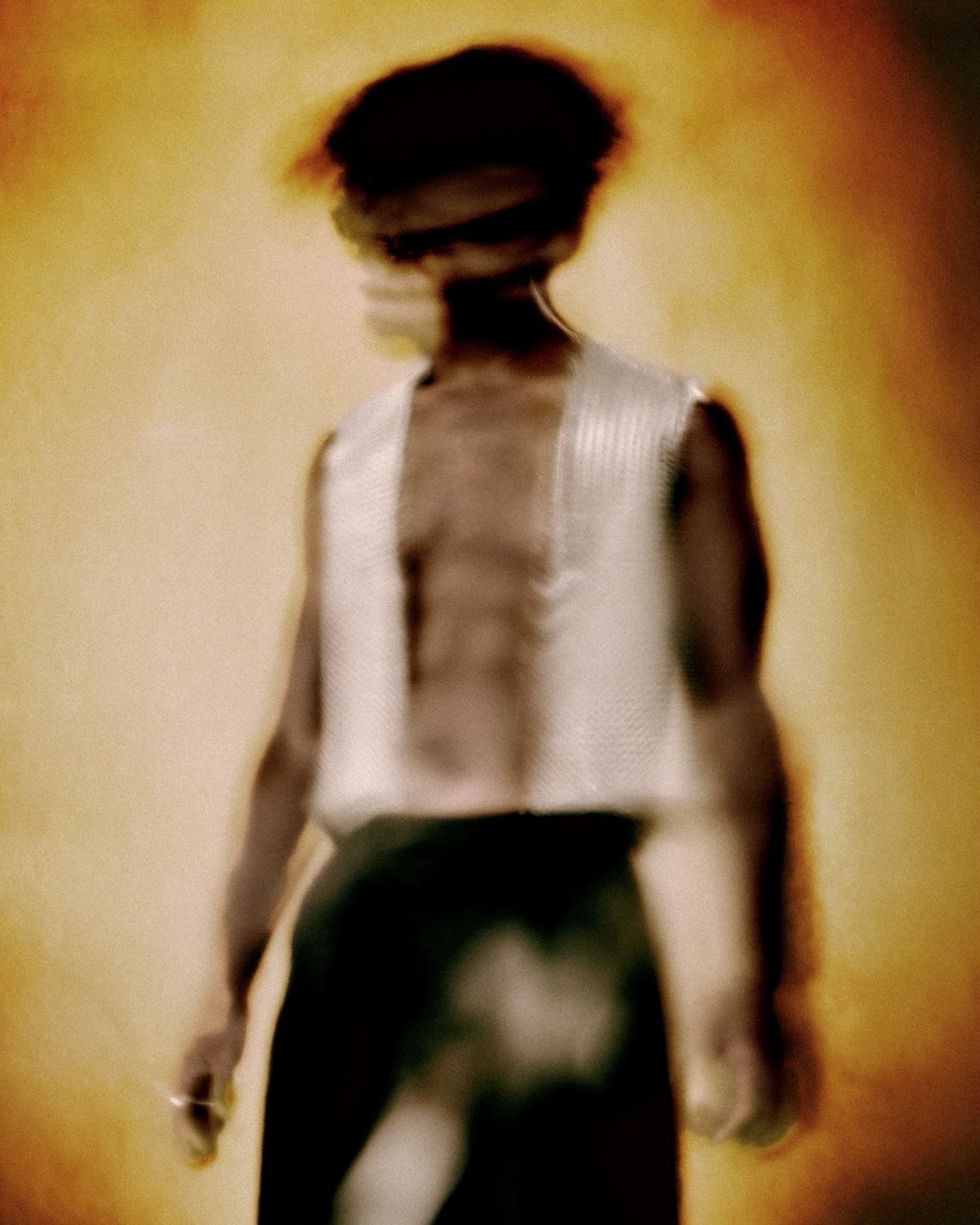
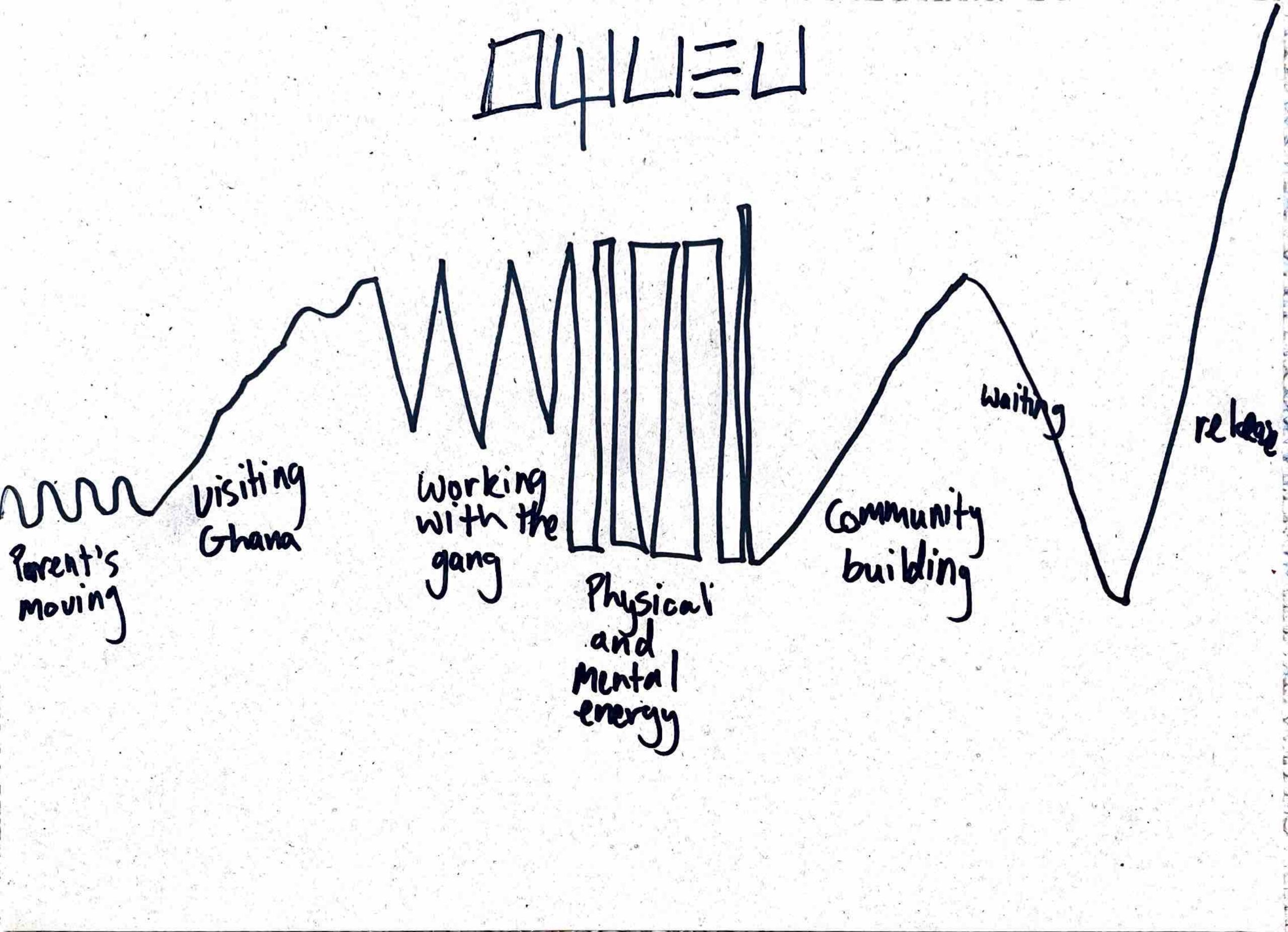
That sentiment doesn’t emerge from isolation, but instead sits alongside another kind of return… One that quietly reshaped the emotional centre of the record. In the midst of writing, Owusu travelled back to his birth country Ghana for the first time in over a decade, visiting family after his parents had made the move back. The journey wasn’t framed as a creative pilgrimage, or even a deliberate part of the album at first. “It was a personal thing that I kind of just turned the cameras on for. It wasn’t planned,” he says. But what unfolded there carried a different kind of weight precisely because of that lack of intention.
Ghana quickly bled into the visual language of the record itself, with music videos shot on the ground capturing real people and moments as they happened. Family, landscape, and everyday movement sit alongside the album’s themes without being overly framed or translated (because who’s going to contain a real-life biker gang?). This time, rather than building a world to house the music, Owusu lets the real one hold it, allowing those visuals to function as an extension of the album’s rawness instead of a stylised escape from it.
The trip felt like less of a homecoming and more like a journey of discovery for Owusu. “In a strange way I’m also an explorer with you guys. I hadn’t been back in 11 years. First time back as an adult. So in the same way I’m showcasing crazy bikers, horse riders going across the beach, incredible monuments… I’m also seeing a lot of that for the first time myself. As much as I’m showcasing it to you guys, it’s being showcased to me in real time.”
Owusu’s undeniable pride in his heritage sits openly alongside curiosity and a recognition that identity isn’t something fixed or fully known, even in a place that is technically home. Instead of being filtered through metaphor, Owusu’s experience in Ghana enters his work as it is: immediate, lived, and still unfolding.
The instinct to move closer rather than step back runs through the rest of the record. Where earlier projects filtered reality through layers of allegory, REDSTAR WU & THE WORLDWIDE SCOURGE feels almost confrontational in its immediacy. Owusu puts it simply: “The world is planet Earth in the 2020s, here and now. A point of departure from my previous albums which are very fantastical, very allegorical. This one is just very much in the here and now… Even calling Red Star Wu a character is a bit of a stretch. It’s more just an alias. Me seeing the world as it is.”
It’s a subtle but significant unravelling of the tools he’s relied on in the past. Because when you remove allegory, you also remove distance. What’s left is something far more unstable and far less mouldable as politics, culture and identity all press directly against the work. Within that instability, the idea of community starts to feel less like a given and more like something that needs to be actively rebuilt.
“We as regular people are not each other’s enemy,” Owusu says, pointing towards the possibility of coexistence without complete alignment. “If you have a net worth under a billion dollars, I have no beef with you. We can find common ground.”
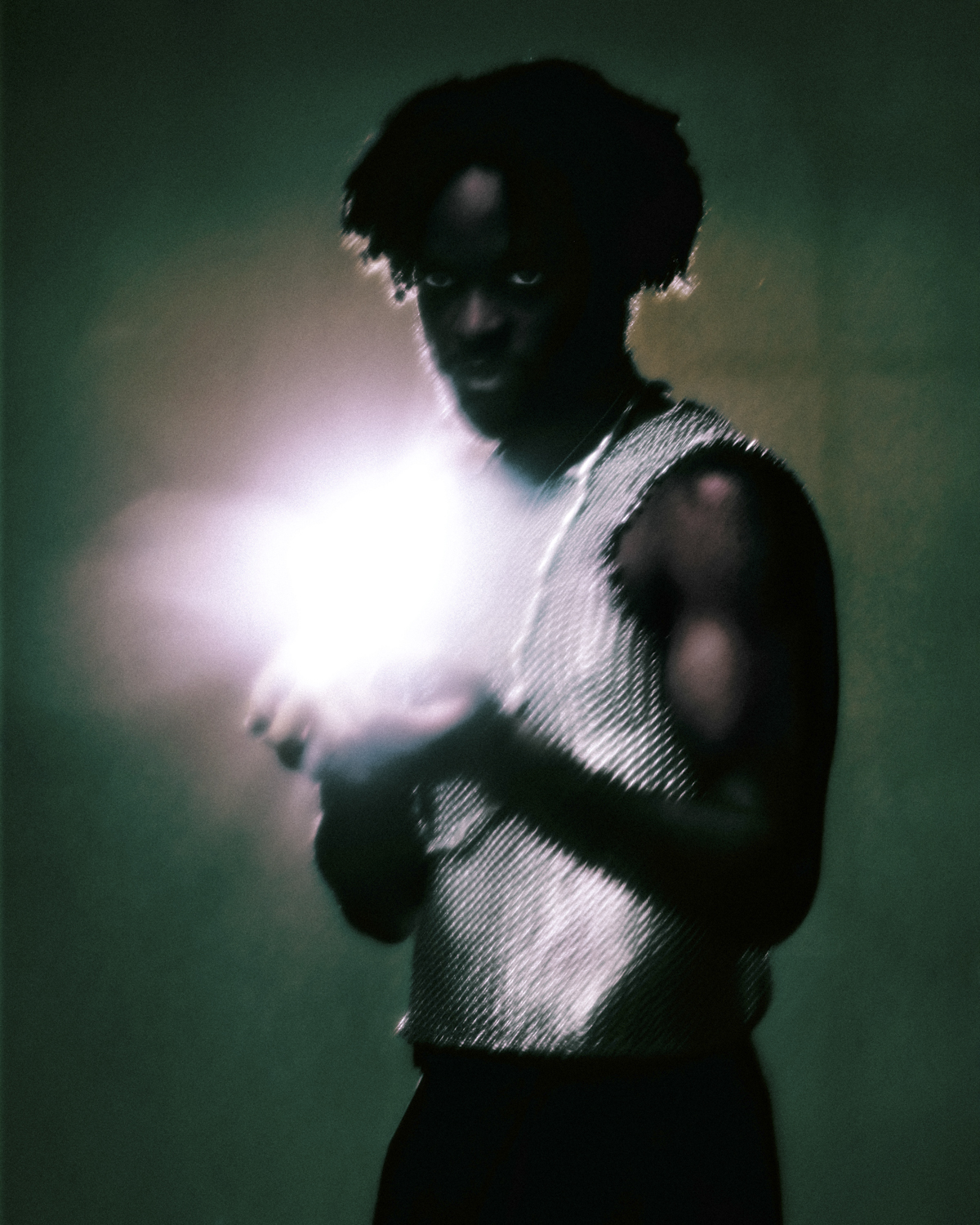
“If you have a net worth under a billion dollars, I have no beef with you…”
When we ask Owusu to describe his community right now he’s quick to answer. “The community around me now is very like-minded people. Switched on, down to clown. But I’m trying to make my community expansive. I love the people who’ve supported me up until this point, and I want them in my community forever, but I also want my community to include someone who thinks the complete opposite of what I think.”
“I posted a story [on social media] a couple of weeks ago. I said I want to do some side quests. Who has a skill they’re willing to teach me, however random? I got people wanting to teach me astrology and tarot, Irish dancers, fire twirlers, skydivers. I had a guy offer cattle herding and sheep shearing, and I was like, yeah, fuck yeah! Show me what’s going on out there on your farm. But the skill itself is just the bonus. I want to know about the person behind the skill. I want you to teach me, not send me a link. I’ll come to you. The same reason someone might want to interview me. Because they like the music and want to know the person behind it.”
In a culture where connection is often mediated through screens and reduced to content, there’s something intentional and refreshing about choosing proximity instead. It’s slower, less efficient, and far less controlled, but it also creates space for something more unpredictable to emerge. That same willingness to step into the unknown is embedded in Owusu’s creative process as well. Rather than refining a singular sound or leaning into what he already knows how to do, Owusu gravitates towards the unfamiliar edges of his own practice. “I purposely do things I think I’m not good at, things I’m not necessarily well-versed in, because that’s what excites me,” he says.
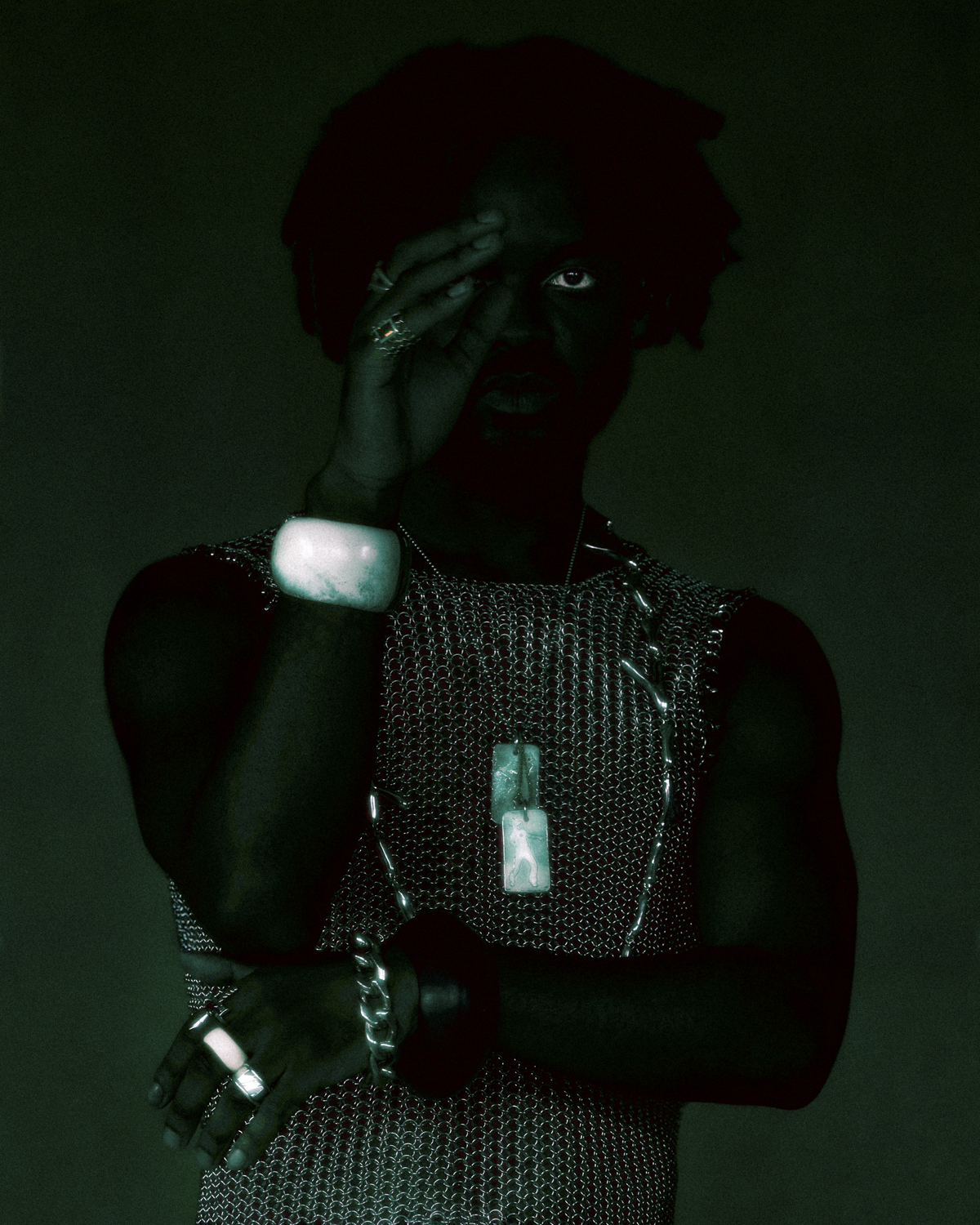

Drawing upon the new album for examples, he explains “there’s a song called 4LIFE which is kind of alt-pop, almost borrowing hyperpop aesthetics. It’s never been about being good. It’s always been about trying to capture what I want to capture in a new way. That’s why you’ll catch me singing with a falsetto, exploring punk, exploring different genres. These aren’t things I necessarily grew up doing, they were just new things to try out. Whether I’m technically good at it or not, it’s part of the fun little roller coaster.”
On a personal level, Owusu’s sense of constant movement never quite resolves. There’s a fluidity that runs through the way he talks about himself: not as a fixed identity, but as something constantly shifting, pulled between competing instincts. “Even as a narrator on this album, I’m constantly battling between who I am versus who I want to be,” he says. “The person I want to be always extends the olive branch, creates coalition… The person I am does that too, but is also a human with anger and sadness. How could you let this happen?” It’s not framed as a contradiction that needs to be solved, but as an acknowledgement that it doesn’t have to always be binary. Owusu exists as a reflection of the same complexity he’s observing in the world around him.
What sits at the centre of REDSTAR WU & THE WORLDWIDE SCOURGE, and Owusu’s artistry, isn’t a resolution, but presence. A refusal to retreat into spaces that feel safe, familiar, and self-reinforcing. “My evolutions as an artist are so tied to my evolutions as a human being” he says. “In hip-hop, so much of evolution is about skill and honing technique. But I’ve always felt like in my form of artistry, it’s about trying to get an honest snapshot of where I am in life as a person. If I’d tried this earlier, it would have been different, but I don’t know if it would have been better or worse. Every album is a snapshot of where I am in that space and time. It’s less about trying to get better and more about just checking in.”
“Showing you where I’m at, what I’m thinking.”